.webp)






The Sentient Algorithm: A Deep Dive into the Biological Neural Network of Pandora
Avatar: Frontiers of Pandora™ is more than a technical showcase for the Snowdrop engine; it is a digital ecosystem that attempts to simulate the biological interconnectedness described in James Cameron’s lore. Unlike many open-world games where the environment acts as a static backdrop, Pandora functions as a sentient machine. At the heart of this machine is the concept of the Great Mother, an overarching neural network that facilitates communication between flora, fauna, and the Na'vi. This exploration dives into the specific biological mechanics of Eywa as a tangible, data-driven force within the game's Western Frontier.
The game posits that the environment is not merely a collection of assets but a series of nodes in a planetary-scale consciousness. By analyzing the interplay between the player’s Sarentu heritage and the sensory data provided by the world, we can uncover a sophisticated simulation of symbiotic evolution. This isn't just about survival; it's about the management of a biological "internet" where information is the most valuable resource.
The Bio-Electrical Foundations of the Western Frontier
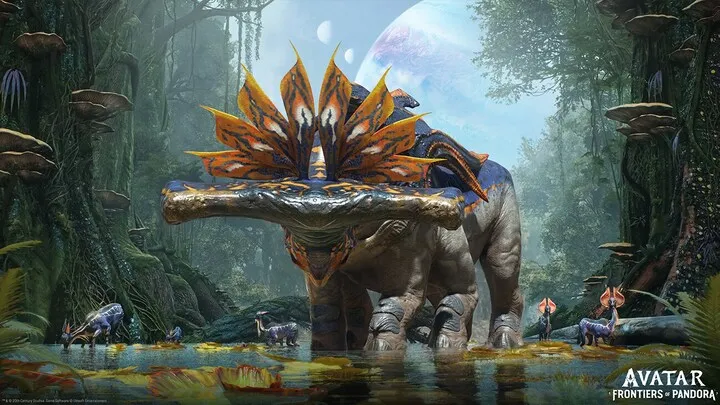
In the game, the Western Frontier is not merely a collection of biomes but a massive bio-electrical circuit. Every plant, from the towering Hometrees to the smallest Pitcher Plant, contains a specialized set of queue-like nerve endings. This isn't just flavor text; the game’s "Na'vi Senses" mechanic is the player's interface with this network. When you highlight a plant, you aren't just seeing a UI prompt—you are witnessing the protagonist’s neural connection to the planet’s collective memory, allowing for the identification of chemical properties and biological history.
The internal logic suggest that the soil itself is a conductive medium. Through the use of mycorrhizal-like fungal networks, Eywa receives "input" from the footsteps of the RDA’s heavy machinery and "output" through the shifting behaviors of the wildlife. This deep-rooted connection explains why the environment reacts so violently to human presence. The "Pollution" mechanic is a literal representation of a localized immune response failing within the planetary organism, causing the neural links to go silent and the flora to wither in a state of biological depression.
The Evolution of Tsaheylu: Beyond the Saddle
The act of Tsaheylu, or the "Bond," is often misunderstood by players as a simple taming mechanic. In Frontiers of Pandora, Tsaheylu is depicted as a high-bandwidth data transfer. When the player connects their neural queue to an Ikran or a Direhorse, they are essentially merging two operating systems. This allows for near-instantaneous movement commands because the motor cortex of the Na'vi and the animal are operating as a single unit. This synchronization is why the flight controls feel so fluid; the game is simulating a shared nervous system where the bird's wings become the player's own limbs.
This connection goes deeper than physical movement. Through the "Ancestral Memories" quests, we see that Tsaheylu can be used to access historical data stored within the planet's flora. The Sarentu clan, as the keepers of stories, are particularly sensitive to these "biological downloads." When you connect to a Tarsyu flower, you aren't just gaining a skill; you are retrieving encrypted genetic data passed down through the neural network of the planet for generations, effectively "patching" the player's biological code with the wisdom of their ancestors.
The Great Weaver: Analyzing Sarentu Cultural Biology
The Sarentu, the clan to which the player character belongs, serve as the "diplomats" of this biological network. Their specific role in the history of the Western Frontier was to weave the stories of different clans together, mirroring the way Eywa weaves the biological threads of the forest. This isn't just a metaphor; the Sarentu's ability to "speak" to the different biomes allows them to act as a bridge between the Aranahe’s forest wisdom and the Zeswa’s plains-craft. They are the human equivalent of a cross-platform interface, capable of interpreting disparate biological "languages."
From a biological perspective, the Sarentu possess a more plastic neural queue, allowing them to interface with a wider variety of specialized Tarsyu plants than other clans. This genetic predisposition is why the RDA was so obsessed with them. They weren't just kidnapping children; they were attempting to harvest the most versatile biological "interface" the planet had ever evolved. The Sarentu are essentially the "admin" users of the Pandora network, capable of accessing deeper layers of the world's consciousness that remain hidden from those who only interact with the surface-level ecology.
The Psychosomatic Impact of RDA Industrialization
The presence of the RDA in the Western Frontier acts as a neurotoxin. When an extractor plant is established, it doesn't just kill the trees; it severs the local "synapses" of Eywa. Players notice that in polluted zones, the wildlife becomes feral or "Cloaked." This is a physiological response to the loss of the neural network's calming influence. Without the steady "ping" of Eywa’s signal, the animals' fight-or-flight systems are permanently stuck in the "on" position, leading to aggressive behavior and physical degradation.
This ecological trauma is reflected in the protagonist's own journey. The struggle to reconnect with Pandora after years in human captivity is essentially a story of neural rehabilitation. The player must physically move through the world, touching the flora and engaging in the network, to "re-wire" a brain that was conditioned to process information through human logic and cold technology rather than biological intuition. Reclaiming the land from the RDA is therefore a surgical process—removing the cancerous industrial nodes to allow the natural electrical current to flow once more.
The Clouded Forest: A Study in Fungal Intelligence
As the narrative progresses to the Clouded Forest, the theme shifts from electrical signals to chemical ones. The Kame'tire clan lives in a biome dominated by mushrooms and dense fog, where the neural network operates via spores. This is the "dark fiber" of Pandora’s internet. Here, communication is slower but more pervasive, focusing on the decomposition of old life to fuel the new—a literal manifestation of the "Great Mother" recycling energy. This region emphasizes the "memory" aspect of the planet, where past traumas are buried beneath layers of mycelium.
The healing rituals of the Kame'tire involve the use of specialized fungi that can interact directly with a Na'vi's nervous system to purge toxins. This highlights that Eywa is not just a spiritual concept, but a pharmaceutical collective. The game rewards the player for understanding which mushrooms act as stimulants and which act as sedatives, further grounding the player in the specific biological reality of the region. The Clouded Forest represents the "subconscious" of Pandora, where secrets are kept and the planet’s immune system is at its most sophisticated and elusive.
Kinship and Kinetic Energy: The Zeswa Connection

Moving to the Upper Plains, the interaction with Eywa changes from the dense, vertical connections of the forest to the wide, kinetic vibrations of the grasslands. The Zeswa clan interacts with the neural network through movement and wind. Their relationship with the Zakru—massive, mountain-like creatures—is a form of slow-motion symbiosis. The Zakru act as mobile hubs for the network, their slow pulses acting as a metronome for the entire plains ecosystem.
In this biome, the "connection" is felt through the feet and the wind. The Zeswa don't just live on the plains; they move with the thermal currents, much like the signals traveling through a nerve. This illustrates that Eywa’s network is not uniform. Just as a human body has different types of nerves for pressure, heat, and pain, Pandora has different biomes to process different types of planetary "data." The Zeswa represent the kinetic energy of the network, proving that Eywa is as much about the flow of physical force as it is about the storage of memory.
Biological Warfare: The Na'vi as an Immune System
The player’s combat role in the game can be analyzed through the lens of immunology. When the RDA (the virus) enters the system, the Sarentu (the white blood cell) is activated. The weapons provided by the different clans—the Aranahe’s precision bows or the Zeswa’s heavy spear-throwers—are not just tools of war; they are specialized biological responses. For instance, the use of "Viperwolf" pheromone arrows or "Stinkpouch" bombs is a literal use of the planet's own chemical arsenal to target foreign bodies.
This perspective shifts the player’s motivation. You aren't just a guerrilla fighter; you are a biological imperative. The "Hunter's Guide" in the game acts as a database of "antigens" and "antibodies." By learning the weak points of RDA AMP suits, which are often the cooling vents or fuel tanks, the player acts as a targeted enzyme, breaking down the synthetic structures that the planet cannot digest on its own. The game’s focus on stealth and precision reinforces this—the immune system is most effective when it is targeted, not when it causes widespread inflammation.
The Tarsyu and the Preservation of the "Source Code"
The Tarsyu flowers are perhaps the most significant biological entities in the Western Frontier. They are not merely "skill trees"; they are the hard drives of Pandora. Each Tarsyu contains a "memory" of a specific physical capability, such as the double jump or improved sensory perception. From a scientific standpoint within the game's logic, these plants store epigenetic information. When a Sarentu touches them, the plant triggers a dormant gene within the Na'vi, "unlocking" a physical trait that was present in their ancestors but suppressed by their time in the RDA’s sterile environment.
This suggests that the Na'vi are a "programmable" species, designed by Eywa to be highly adaptable to the needs of the ecosystem. The Tarsyu are the mechanism for this adaptation. If the planet needs a protector who can leap higher or see better in the dark, Eywa provides the "software update" through these floral nodes. This deepens the tragedy of the RDA's destruction; when they bulldoze a forest, they aren't just killing trees—they are deleting the unique genetic history and the future "updates" of the Na'vi people.
Sensory Overload: The Bio-Luminescent UI
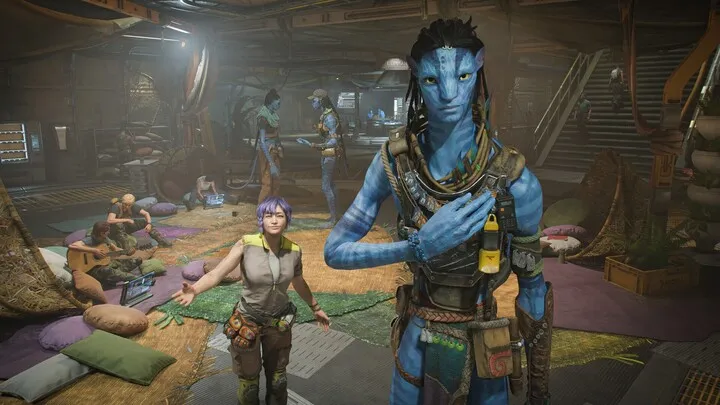
The visual language of Frontiers of Pandora is rooted in bioluminescence, which serves as a biological status report. On Pandora, light is information. The way a plant glows can indicate its health, its toxicity, or its readiness for harvest. For the player, this creates a state of sensory immersion where the UI and the world are indistinguishable. The bioluminescence is the "monitor" of the planetary computer, showing the flow of energy in real-time.
This light-based communication system allows for a non-verbal understanding of the world. In the depths of the forest at night, the "pulse" of the planet is most visible. The player learns to navigate not by coordinates, but by the rhythm of the lights. This mirrors the real-world biological phenomenon of quorum sensing in bacteria, where organisms coordinate their behavior based on the density of signaling molecules. In the game, when the player performs a successful action, the forest literally "brightens" in response, a feedback loop that reinforces the player’s status as a welcome part of the organism.
The Great Cycle: Conclusion and Biological Equilibrium
In conclusion, Avatar: Frontiers of Pandora™ succeeds by treating its world as a singular, living entity rather than a map to be cleared. By focusing on the scientific and biological underpinnings of the Na'vi's connection to Eywa, the game offers a profound commentary on symbiosis. The Western Frontier is a testament to the idea that life, when perfectly networked, creates a resilience that no amount of industrial force can truly extinguish.
As players, we do not simply play a game; we participate in a simulation of biological harmony. The Sarentu’s journey is a microcosm of the planet’s own struggle for balance. Through the mechanics of Tsaheylu, the chemistry of the Clouded Forest, and the kinetic energy of the Upper Plains, we see a world that is "wired" for connection. To play the game is to become a functioning cell within Pandora's massive, bioluminescent body, reminding us that in an interconnected system, the health of the individual is inseparable from the health of the whole.