Mastering Kaia Island: An Advanced Guide to Optimization and Wealth in Play Together

Mastering Kaia Island: An Advanced Guide to Optimization and Wealth in Play Together
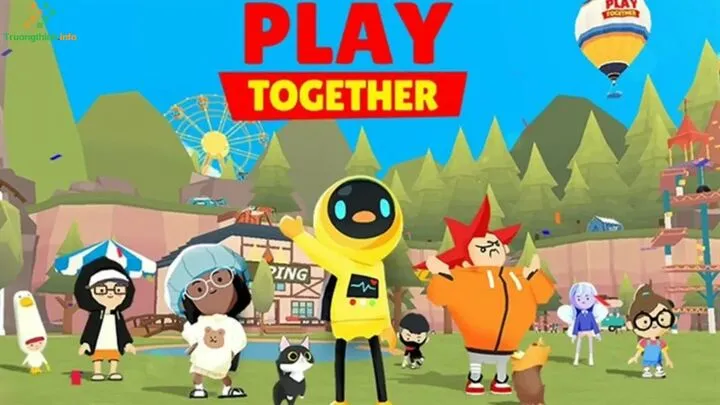
Play Together, developed by Haegin, is often dismissed as a simple social simulator, but beneath its colorful, "blocky" exterior lies a complex economy and a series of interlocking systems that reward precision, timing, and strategic resource management. To the uninitiated, Kaia Island is a playground; to the expert, it is a mathematical landscape where fishing shadows, obstacle course shortcuts, and pet growth cycles can be optimized for maximum efficiency. This guide moves beyond the basics of "how to move" and dives into the high-level strategies required to dominate the leaderboards, accumulate millions of Stars, and build an estate that stands as a testament to your mechanical mastery of the game.
1. The Early Morning Grind: Maximizing the Daily Quest Loop
The secret to long-term success in Play Together begins the moment the server resets. Most players wander aimlessly, but an optimized "Daily Loop" ensures you maximize your Star-to-time ratio. Start by immediately heading to the Plaza to pick up the NPC quests from the Pizza Shop and the Police Station. These quests are static and predictable; by memorizing the delivery routes and using a high-speed vehicle like the Skateboard or the Luxury Car, you can clear the entire board in under ten minutes. This provides a foundational income of Gems and Stars that fuels your more expensive pursuits later in the day.
Furthermore, don't ignore the "Recycle" mechanic early in your session. Clearing out low-value items and furniture you’ve accumulated from free boxes allows you to gain Sprouts, which are the only currency for purchasing high-tier themed boxes. A disciplined player treats the first 30 minutes of gameplay as a "sprint," clearing all non-variable tasks before moving into the high-volatility world of fishing and gambling on Game Party rewards.
2. Ichthyology Excellence: The Science of Shadow Sizes and Locations
Fishing is the backbone of the Kaia Island economy, but catching "Crown" rarities requires more than just a rod and patience. You must understand the Shadow Size Hierarchy. There are six distinct shadow sizes, ranging from the tiny "Size 1" (often common fish or trash) to the massive "Size 6" (sharks, whales, and rare sea creatures). Advanced players use a "Cast and Recast" strategy: if the shadow size doesn't match the rare species known to spawn in that specific area at that specific time, they immediately pull the line without waiting for a bite to save durability on high-end rods.
Timing is also critical. Play Together operates on a fast-forward day/night cycle. Certain legendary fish, like the Sawtooth Shark, only appear at night. Keeping a "Fishing Calendar" or a second device with a timer ensures you are in the right biome the moment the sun sets, maximizing your window for catching high-value specimens before the morning reset.
Top-Tier Fishing Spots
- The Blue Hole: Best for high-tier sharks; requires a boat.
- The Waterfall: Exclusive home to the Golden Carp and Axolotl.
- The Deep Sea: Only accessible via the cruise ship, home to the Megamouth Shark.
3. Academic Dominance: Strategies for the Kaia School Mini-Games
The School is often overlooked by grinders, but achieving an "A+" rank consistently provides a significant boost to your character's prestige and daily Star intake. To dominate the Mathematics and Coding classes, the trick is UI optimization. For Math, focus on the "ones" column of the answers; often, the game presents four choices where only one digit is mathematically possible, allowing you to answer in milliseconds without calculating the full sum. In Coding, it is about pattern recognition—memorizing the directional sequences becomes muscle memory after several dozen sessions.
In the Biology and Art classes, spatial awareness is key. For Biology, the placement of organs or cells follows a fixed grid. If you memorize the "anchor points" on your screen, you can drag and drop items with a 100% accuracy rate. Competitive players often use screen overlays or physical markers on their tablets to ensure their taps are frame-perfect, as the difference between an A and an A+ is often a fraction of a second.
4. The Art of the Obby: Conquering the Game Party Obstacle Courses
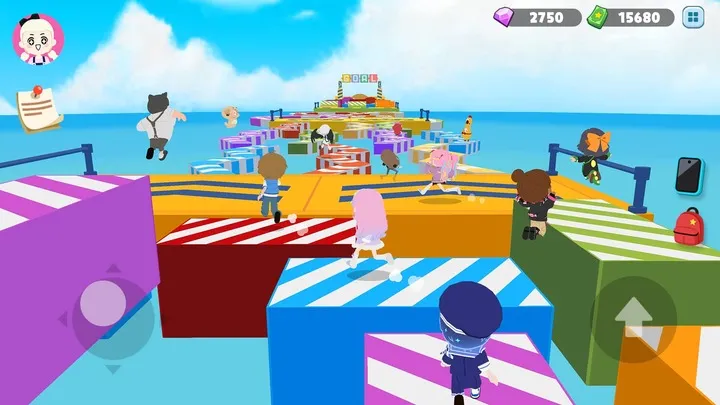
The Game Party is the most "skill-expressive" part of Play Together. Specifically, the "Obstacle Race" (Obby) maps like the Desert or the Ice World have hidden shortcuts that the developers left for observant players. Instead of following the main path of moving platforms, look for static geometry—like the edges of a wall or a decorative pillar—that allows you to bypass entire sections. Jumping at the very last frame of a platform’s edge gives you a slight distance boost due to the game's momentum physics.
Key Obstacle Tactics:
- The Crown Rush: In the "Falling Blocks" game, never stand in the center. Stay on the edges to have more escape routes when blocks start vanishing.
- Momentum Jumping: In the "Race" maps, jumping repeatedly while moving downhill increases your velocity slightly compared to running.
5. Pet Management: The Efficient Path to Mega-Evolution
Pets in Play Together are more than just cosmetic followers; they are long-term investments. Each pet has a "Needs" cycle that triggers every few minutes. To optimize this, you should never leave your pet's needs unfulfilled while you are fishing. Combining the "Rest" and "Wash" needs by placing a bathtub and a bed right next to your favorite fishing spot allows you to level up your pet without ever stopping your Star-grinding. This is the most efficient way to reach the "Mega" stage, which unlocks unique animations and riding capabilities.
Moreover, different eggs have different rarity weights. If your goal is a high-tier pet like the Dragon or the Unicorn, don't waste your Gems on "Common Eggs." Save specifically for the "Premium Pet Eggs" during limited-time events. The statistical probability of a legendary pull is nearly triple during these windows. It is better to have one Level 5 Legendary pet than a dozen Level 1 Commons that provide no utility or prestige.
6. Real Estate as an Investment: Designing for Social "Likes"
In Kaia Island, your house is your resume. While it costs Stars to furnish, a high-ranking house on the "Popularity" list becomes a passive income generator. By hosting "House Parties" and creating a themed environment—such as a "Parkour Challenge" or a "Luxury Cafe"—you attract other players who leave "Likes" and "Stars." High popularity rankings often result in your house being featured, leading to a snowball effect of social clout and gifted items.
To optimize your layout, focus on Interactive Furniture. Items like the Piano, the Trampoline, or the Swimming Pool keep players in your house longer. The longer a player stays, the more likely they are to interact with your "Star Box." Clever interior designers use a "Pathing" strategy, where the most interesting items are at the back of the house, forcing visitors to walk through your entire gallery of rare fish and trophies before they can leave.
7. The Fashion Meta: Combining Aesthetics with Functional Speed
While many items in the clothing shop are purely cosmetic, certain "Vehicle" items and "Costumes" have hidden benefits regarding character hitbox and movement perception. While the game technically normalizes run speed, smaller avatars (achieved through certain costumes or the "Mini" potion) can navigate tight gaps in Game Party races more easily. Furthermore, investing in high-end vehicles like the Police Car or the Off-Road Vehicle isn't just about style—it's about the speed at which you can travel between quest NPCs.
The "Pro" tip for fashion is to watch the Limited Edition timers. Items that are removed from the shop often become highly sought-after in the community's unofficial trading circles. By purchasing "timed" items with Gems now, you are essentially "banking" your currency in the form of rare assets that mark you as an "OG" (Original Gamer) in future updates, which can be useful for social leverage in high-tier clubs.
8. Advanced Insect Catching: The Stealth and Timing Technique
With the introduction of the Insect system, players found a new way to earn Stars, but catching the rare "Golden" butterflies and beetles requires a steady hand. The key is the Slow-Walk. When you see a rare insect, you must hold the "Net" button to enter a crouching stance. Moving the joystick only slightly allows you to approach without triggering the "Scare" mechanic. If the insect's wings flutter aggressively, stop moving immediately and wait for it to settle.
Location-wise, the Camping Ground and the Lost Island are the gold mines for entomologists. During the day, focus on the flower beds for butterflies; at night, check the tree trunks for rare beetles. Many players make the mistake of swinging the net too early. Wait until the "Exclamation Mark" appears over the insect's head, which signifies it is within the guaranteed capture radius of your current net's tier.
9. The "Lost Island" Strategy: High-Risk, High-Reward Exploration

The Lost Island is a rotating event that offers some of the rarest loot in the game, but it requires "Treasure Maps" and "Radars." To be efficient here, don't just dig randomly. Use the Bipping Radar sound cues. The pitch and frequency of the beep increase as you get closer to a gold-tier chest. High-level players use headphones to triangulate the exact position of the treasure, saving their shovel's durability for only the most valuable "Gold" and "Red" signals.
Additionally, coordinate with a "Mining Party." If four players use their radars in a grid pattern, you can clear a Lost Island map 400% faster than a solo player. This "Wolfpack" strategy ensures that your group captures all the top-tier rewards before the island instance resets or the storm closes in. Always carry at least three backup shovels of "Professional" grade or higher to avoid having to leave a high-yield zone early.
10. Resource Management: When to Spend Gems vs. Stars
The final pillar of Play Together mastery is understanding your "Currency Priority." Stars are for "Expendables" (bait, low-tier furniture, repair costs), while Gems are for "Permanent Upgrades" (high-tier rods, vehicles, and premium pets). A common mistake is using Gems to speed up pet growth or buy Stars. This is mathematically inefficient. Stars can be farmed infinitely through fishing; Gems are a finite resource gated by time and daily achievements.
Focus your Gem spending on the Professional Fishing Rod first. This rod increases the chance of rare fish appearing and has high durability, which in turn allows you to farm Stars more effectively. It is a self-sustaining cycle. Once you have the best tools, transition your Gem spending toward limited-time "Themed Boxes" to ensure you have a diverse portfolio of rare assets that won't return to the game for at least another year.
Mastering Play Together is a journey from being a visitor on Kaia Island to becoming one of its elite citizens. By optimizing your daily routines, understanding the hidden mechanics of fishing and insect catching, and managing your resources with a long-term vision, you can rise above the casual player base. The game is a vibrant social space, but for those who look closely, it is also a rewarding strategic challenge that offers endless depth for those willing to put in the work. See you on the island, and may your next cast pull up a Crown Whale.