.webp)
Mastering Boss Patterns in Cuphead
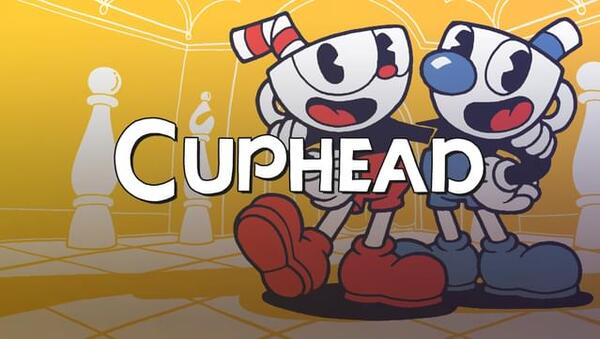
Cuphead is difficult not simply because its bosses attack quickly, but because players must process several threats at the same time. The key to winning consistently is learning attack patterns, recognizing visual cues, controlling position, and knowing when to prioritize survival over damage.
Instead of relying entirely on reflexes, players can break each boss fight into predictable sequences. Once these sequences become familiar, even the most chaotic battles become easier to control.
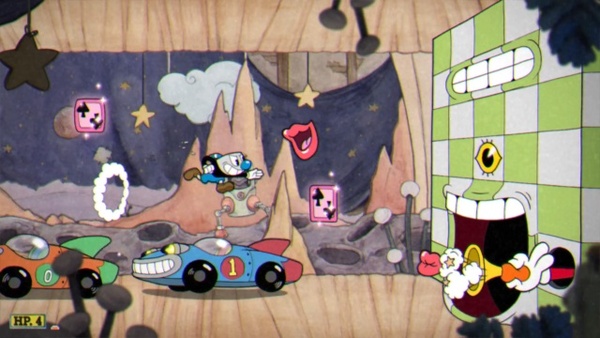
Study the Boss Before Trying to Win
Do not treat every attempt as a serious attempt to defeat the boss. During the first few runs, concentrate on observing attacks, transformations, projectile directions, and dangerous positions.
After each death, identify the exact cause. For example, “I was trapped on the left when the second attack started” is more useful than simply thinking the boss is too difficult.
Turn Failure into Information
Each failed attempt should reveal something about the boss. Over time, these observations create a practical map of the fight.
Separate Visual Noise from Real Threats
Cuphead's detailed animation can make boss fights visually overwhelming. Background movement, particles, enemies, and projectiles may all appear simultaneously.
Focus primarily on objects approaching Cuphead rather than constantly watching the boss. Immediate collision threats should receive the highest priority.
Threat Priority
• Incoming projectiles
• Available escape routes
• Boss attack signals
• Pink parry objects
• Damage opportunities
Learn Each Boss Phase Separately
Boss fights become easier when divided into phases. Instead of trying to master the entire encounter at once, learn to complete the first phase consistently before concentrating on the second.
Your first objective should be reaching later phases with as much health as possible. Once an early phase becomes automatic, you can devote more attention to unfamiliar attacks.
Consistency Before Speed
A safe strategy that works repeatedly is usually more useful than an aggressive strategy that occasionally produces a fast victory.
Recognize Attack Signals
Many Cuphead attacks have visual or audio warnings. A boss might change expression, raise an arm, move to another position, pause, or make a particular sound before attacking.
Learning these signals gives you extra time to react. Experienced players often begin moving before the dangerous projectile actually appears.
Read the Boss's Animation
Watch what happens immediately before attacks that frequently hit you. Once you associate an animation with a particular attack, your response becomes much faster.
Control Your Position
Good dodging begins before the projectile reaches you. Standing in a poor location can make an otherwise simple attack extremely difficult to avoid.
Whenever possible, maintain enough open space to move in several directions. Avoid repeatedly retreating toward the edge of the arena unless the attack specifically requires it.
Think One Move Ahead
Do not only ask where you need to move now. Consider where your dodge will leave you when the next attack begins.
Avoid Unnecessary Movement
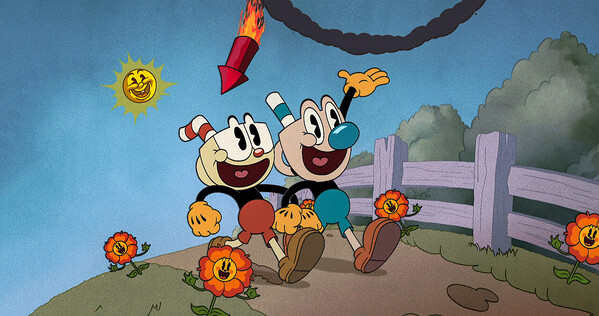
Panic movement is one of the most common reasons players take damage. Constant jumping and dashing can accidentally move Cuphead directly into another projectile.
Use the smallest movement necessary. If walking is enough, do not jump. If jumping is enough, do not automatically dash.
Dodge and Recover
After avoiding an attack, return to a useful position whenever possible. This prevents several successful dodges from gradually pushing you into a dangerous corner.
Parry Only When It Is Safe
Pink objects provide valuable parry opportunities, but not every parry is worth attempting. A poorly timed parry can send Cuphead directly into another attack.
Before parrying, consider where Cuphead will be afterward. Survival should usually take priority over gaining additional meter.
Use Parry as Part of the Pattern
Predictable parry opportunities can become timing markers: attack, dodge, parry, reposition, and attack again.
Separate Survival from Damage
When learning a difficult phase, stop worrying about maximum damage. Concentrate on surviving several complete attack cycles first.
Once you can consistently avoid the attacks, begin identifying safe opportunities to fire. Reliable damage is more valuable than aggressive attacks that frequently result in losing health.
Find Safe Damage Windows
Attack aggressively during low-risk moments and focus on survival when the screen becomes crowded.
Build Muscle Memory
Repeated patterns eventually become automatic. A sequence such as “move left, wait, jump, then return” no longer requires conscious thought after enough practice.
This explains why a boss can initially seem impossible but later feel surprisingly manageable. The boss has not become slower; your brain has learned what to expect.
Simple Practice Cycle
• Identify the attack causing problems
• Find its earliest warning signal
• Choose a safe starting position
• Practice the minimum movement needed
• Repeat until the response becomes automatic
Move from Reaction to Prediction
The highest level of boss control comes from predicting attacks rather than reacting after they appear. Familiar animations provide enough information to anticipate where danger will develop.
Some boss attacks contain random elements, so memorization alone is not enough. Learn the predictable structure first, then use your reflexes to handle the remaining variations.
Three Important Questions
• What signal tells me which attack is coming?
• Where should I stand before it begins?
• Where should I finish my dodge?
Answering these questions for every major attack transforms a difficult fight into a series of manageable decisions.
Conclusion
Mastering Cuphead bosses is less about having extraordinary reflexes and more about understanding patterns. Study each phase, recognize attack signals, control your position, minimize unnecessary movement, and choose parries carefully.
Most importantly, move from reaction toward anticipation. Once you know what an animation means before the attack appears, difficult boss fights begin to feel slower and more predictable. With deliberate practice, seemingly chaotic encounters can become controlled and repeatable.