.webp)
The Persistent Technical Shadows: Dissecting the Performance Crisis in Star Wars Jedi: Survivor on PC
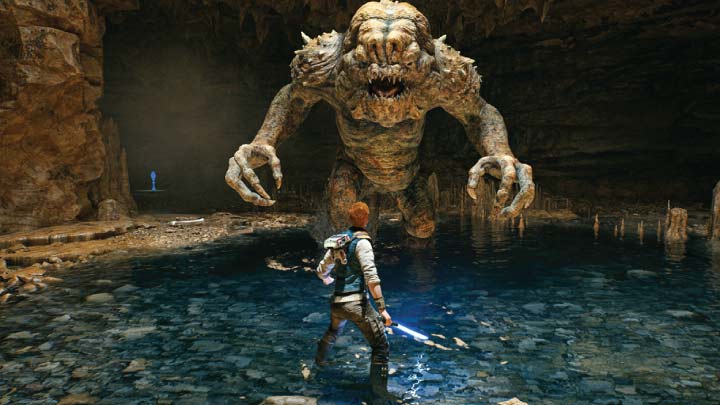
Star Wars Jedi: Survivor arrived in April 2023 as a highly anticipated sequel, expanding Cal Kestis’s journey with denser worlds, refined combat stances, and a richer narrative of survival under the Empire’s tightening grip. Yet beneath the polished lightsaber duels and Force powers lay a technical foundation that fractured under pressure, particularly on PC. What began as launch-day stuttering and frame-rate collapses evolved into a multi-year saga of incomplete optimization, revealing deep architectural limitations in Respawn’s Unreal Engine 4 implementation. This article examines the specific issue of persistent performance instability—CPU bottlenecks, traversal and shader stutter, animation jitter, and the slow, incomplete path toward resolution—tracing its evolution from release through late 2024 patches and into a surprising 2026 community discovery.
Pre-Launch Anticipation and the Shadow of Fallen Order’s Technical Legacy
Expectations for Jedi: Survivor were shaped by the mixed technical reception of its predecessor. Jedi: Fallen Order had suffered from traversal stutter and uneven frame pacing on PC, issues Digital Foundry and players repeatedly highlighted as engine-level rather than simple setting problems. Respawn positioned Survivor as a more ambitious title with larger open areas on Koboh and Jedha, denser enemy encounters, and optional ray tracing. Marketing materials emphasized next-generation fidelity, yet early previews offered limited insight into how the game would scale across PC hardware configurations.
The delay from an original March 2023 target to April 28 was publicly framed as time for final polish. Internally, the team faced the challenge of adapting a console-first engine design to the highly variable PC landscape. High-end multi-threaded CPUs designed for Windows 11, paired with powerful GPUs, would later prove particularly problematic when running under Windows 10, revealing that core assumptions about hardware utilization had not been thoroughly stress-tested. The absence of comprehensive PC-specific benchmarks in the lead-up left many players unprepared for the severity of the issues that would surface.
Early Warning Signs in the Engine Architecture
Unreal Engine 4’s threading model and asset streaming systems, while flexible, carried known risks when worlds expanded beyond the more linear design of Fallen Order. Low CPU core utilization and reliance on the game thread for animation and camera updates set the stage for the uneven motion that would define the PC experience for years.
Launch Day Chaos: The Immediate Onslaught of Stuttering and Frame Drops
On April 28, 2023, PC players encountered a title that struggled even on high-end hardware. Digital Foundry described it as the worst triple-A PC port of the year so far. Frame rates frequently dipped below 30 fps in open areas despite RTX 4090 and Core i9 12900K combinations. Traversal stutter—sharp frame-time spikes when crossing invisible streaming boundaries—occurred consistently, independent of settings or prior playthroughs. Shader compilation stutter compounded the problem, forcing the game to compile effects on the fly even after a lengthy startup precompilation step.
Ray tracing exacerbated the crisis. Enabling RT lighting and reflections often halved performance, with mid-range cards like the RTX 3070 struggling to maintain playable frame rates at 1440p Epic settings. Low settings offered only marginal gains, indicating that the bottlenecks were not primarily GPU-bound. CPU core utilization remained unusually low; even powerful processors left many cores idle while the game thread became saturated. Steam reviews quickly turned “Mostly Negative,” with performance dominating the criticism.
Specific Hardware Configurations Hit Hardest
- High-end GPUs paired with mid-range or older CPUs produced severe frame loss.
- Windows 10 installations on Windows 11-optimized multi-threaded chips exhibited unexpected behavior.
- VRAM usage spiked aggressively, particularly with RT active, leading to instability on cards with 8–12 GB.
These patterns confirmed that the problems were systemic rather than isolated driver or setting issues.
Console Performance Shortfalls and the Initial Patch Wave
While the PC version drew the sharpest criticism, consoles were not immune. On PS5 and Xbox Series X, the Performance mode targeted 60 fps at dynamic 1440p but frequently failed to hold the target, resulting in screen tearing and noticeable dips during combat or open exploration. Quality mode locked closer to 30 fps but still suffered fluctuations. Cinematics remained locked at 30 fps across modes.
Respawn’s first responses arrived quickly. A day-one patch and subsequent early May updates targeted non-ray-traced rendering performance on PC, delivering roughly 13 percent gains in CPU-limited scenarios on mid-range processors such as the Ryzen 5 3600. Console patches followed, focusing on stability and minor optimizations. Yet these early interventions left the core stutter and animation inconsistencies largely untouched. Players on both platforms continued reporting soft locks, save corruption risks, and uneven pacing that disrupted the flow of combat and exploration.
Immediate Community Workarounds
Players experimented with disabling data sharing, lowering settings aggressively, and forcing Quality mode on consoles to reduce stutter at the cost of responsiveness. These temporary measures underscored how fundamental the issues were.
Community Backlash and Respawn’s Early Acknowledgments
Within days of launch, Respawn issued a public statement acknowledging that the game was “not performing to our standards for a percentage of our PC players,” particularly those with high-end machines or specific configurations. The studio noted challenges with multi-threaded chipsets under Windows 10 and mismatched GPU-CPU pairings. EA Star Wars amplified the message, promising ongoing work while emphasizing that no single comprehensive solution existed due to the diversity of PC hardware.
The response was measured but incomplete. Critics and players pointed out that the issues extended beyond niche configurations; even well-balanced high-end systems struggled. Digital Foundry’s detailed analyses, complete with frame-time graphs, provided objective evidence that traversal stutter and low core utilization were reproducible across hardware tiers. The conversation shifted from isolated complaints to a broader discussion of whether the engine’s design choices had been adequately stress-tested for PC.
This period established a pattern that would persist: incremental official patches, detailed third-party analysis, and persistent community frustration that the game’s excellent combat and world design were being undermined by technical shortcomings.
Mid-2023 Patches: Incremental Gains Amid Persistent CPU Bottlenecks
Throughout May and into the summer of 2023, Respawn released a series of patches that gradually improved baseline performance. Patch 4 delivered meaningful ray-tracing gains—approximately 22 percent in some tested scenarios—and reduced the frequency of certain stutters. Low-settings performance on mid-range CPUs improved by around 25 percent by later updates compared with launch. Yet higher settings, especially with RT enabled, showed far smaller benefits. The fundamental CPU limitation remained: even a 12900K could not sustain 60 fps at reasonable graphical presets in demanding areas.
Shader compilation continued to interrupt gameplay. Although the startup burn process lengthened and captured more shaders over successive patches, new effects still triggered hitches during exploration. Traversal stutter proved particularly stubborn; frame-time spikes occurred in the same locations regardless of how many times a player revisited an area. Animation and camera motion remained uneven even when the frame-rate graph appeared flat, revealing a disconnect between reported FPS and perceived smoothness.
The Limits of Incremental Optimization
Each patch required extensive testing to avoid introducing new problems, slowing the pace of improvement. Players with older hardware or Steam Deck-like configurations found that lowering settings offered diminishing returns, effectively locking them out of a smooth experience.
The September 2023 Overhaul: Reworking Performance Modes and Adding DLSS
Patch 7, released in early September 2023, represented the most significant mid-cycle intervention. On consoles, the Performance mode was completely reworked. By disabling ray tracing and applying extensive GPU and CPU optimizations, Respawn achieved a solid 60 fps lock in many scenarios. Quality mode received stability improvements and reduced fluctuations. Variable Refresh Rate support arrived for PS5. Cinematics remained at 30 fps.
On PC, the same patch introduced native NVIDIA DLSS support, which helped some users recover performance, though results varied. Additional optimizations improved overall frame rates, and save system tweaks reduced corruption risks. Digital Foundry noted progressive gains at lowest settings across earlier patches culminating in this update, yet concluded that the PC version remained fundamentally compromised. CPU-limited scenes still struggled, and animation jitter persisted even under external frame-rate caps.
The addition of DLSS 3 frame generation produced dramatic average FPS increases in CPU-bound areas, but frame-time graphs remained erratic. The underlying animation system, tied to the game thread’s tick rate, continued to produce visible hyper-acceleration and stutter regardless of external locking.
Traversal Stutter and Shader Compilation: The Unyielding Technical Hurdles
Two issues proved especially resistant to patching. Traversal stutter occurred whenever the engine streamed new assets across streaming boundaries. These spikes were largely independent of hardware power or graphical settings; they manifested as multi-frame hitches that broke immersion during exploration of Koboh’s open regions or Jedha’s dense environments. Even after multiple updates, frame-time graphs continued to show 16 ms, 33 ms, and larger jumps on both mid-range and high-end CPUs.
Shader compilation stutter followed a similar pattern. Despite an improved precompilation step that reduced the number of hitches on first visits to areas, new particle effects, Force powers, and environmental interactions still triggered on-the-fly compilation. Patch 9 in September 2024 reduced the count of such events significantly—from more than two dozen to roughly four in a test traversal of Koboh—but the remaining instances remained distracting. Ray tracing compounded both problems by increasing the load on the CPU for BVH structure maintenance.
Why These Issues Persisted
- Heavy reliance on the game thread for critical systems limited parallelization.
- Asset streaming and visibility systems were not fully optimized for the scale of Survivor’s worlds.
- The engine’s handling of animation and camera updates remained tightly coupled to variable frame times.
These architectural choices explained why raw hardware power alone could not eliminate the problems.
Animation and Camera Instability: A Deeper Dive into Frame Pacing Anomalies
Even when average frame rates and frame-time graphs appeared acceptable, players reported that camera movement and character animation felt uneven. The camera would travel inconsistent distances between frames, producing a jittery sensation especially noticeable during continuous running or combat. This phenomenon occurred at locked 60 fps and was more pronounced on weaker CPUs. Digital Foundry analyses demonstrated that the animation system’s delta calculations were sensitive to underlying render times, causing visible hyper-acceleration or skipping even when external tools enforced perfect pacing.
This issue proved particularly damaging to immersion. Jedi: Survivor’s combat relies on precise timing for parries, dodges, and stance switches. Any perceptual inconsistency in motion undermined the tactile feedback that made the systems satisfying. The problem was present from launch and survived every major patch through 2024, becoming one of the most frequently cited remaining complaints among dedicated players.
Attempts to mitigate it through frame-rate caps or DLSS frame generation often introduced additional latency or failed to address the root cause, leaving many users to accept a compromise between smoothness and responsiveness.
Patch 9 and Beyond: Substantial Improvements Yet Fundamental Flaws Remain
Seventeen months after launch, Patch 9 arrived in September 2024 with “substantial performance improvements.” It optimized CPU usage for ray tracing, reduced specific hitching elements, improved mouse and keyboard menu controls, and removed Denuvo DRM—long criticized for potential performance overhead. Shader compilation hitches decreased markedly, and overall frame rates rose across a range of hardware. Last-gen console versions launched around the same time, revealing further trade-offs: significant asset quality reductions, lower resolutions, and occasional instability, yet surprisingly stable 30 fps gameplay on stronger last-gen hardware in some scenarios.
Digital Foundry’s evaluation of Patch 9 was measured. Gains were real, particularly with RT disabled, but the game remained “fundamentally broken” in key respects. Traversal stutter, while reduced in severity, still occurred. Animation and camera issues showed no meaningful improvement. On high-end systems the experience was better than launch; on mid-range hardware it continued to feel compromised. More than 500 days after release, the PC version had not reached a state Digital Foundry considered fully fit for purpose.
Subsequent updates and the eventual last-gen ports demonstrated Respawn’s ongoing commitment, yet the core technical debt accumulated during development continued to limit the ceiling of what patches could achieve.
The 2026 Discovery: Interpolated Rendering as a Community-Driven Mitigation
In February 2026, nearly three years after launch, Digital Foundry researcher Alex Battaglia uncovered a dormant console command while investigating Unreal Engine features: respawn.InterpolatedRendering. Set to 0 by default, enabling it instructed the engine to produce two render frames per game-thread frame, interpolating camera and animation positions. The effect was striking. Camera travel became more consistent, dramatically reducing the random jitter that had plagued the experience. On a Ryzen 5 3600 in CPU-limited conditions, frame rates rose approximately 20 percent; higher-end CPUs saw smaller but still measurable gains of around 13 percent.
The command appeared to be a console optimization intended for 60 fps modes that had never been activated on PC. Enabling it via tools such as the Universal Unreal Engine Unlocker or community mods provided the most effective mitigation yet discovered for the animation and camera instability. Latency increased modestly—roughly 7–18 ms depending on CPU, more under V-Sync—but many players judged the trade-off worthwhile for a single-player title. Importantly, the fix did not resolve shader compilation stutter, RT-related crashes, or all remaining systemic issues. It was a targeted improvement rather than a complete solution.
This late discovery highlighted both the depth of the original problems and the value of persistent technical analysis. Community tools and detailed frame-time scrutiny continued to surface options that official patches had not fully leveraged.
Conclusion: Lessons from a Technically Compromised Sequel
Star Wars Jedi: Survivor stands as a compelling example of a game whose artistic and mechanical achievements were persistently undercut by technical execution. The specific issues of CPU bottlenecks, traversal and shader stutter, and animation-camera desynchronization were not superficial bugs but symptoms of deeper engine and design decisions that proved difficult to unwind after launch. While successive patches delivered measurable progress and a 2026 community discovery offered meaningful relief for one of the most persistent annoyances, the PC version never fully escaped the shadow of its troubled debut. For players and developers alike, the saga underscores the necessity of rigorous cross-platform validation, transparent communication, and the recognition that ambitious world design must be matched by equally ambitious optimization. The Force may be strong with Cal Kestis, but even the strongest Jedi cannot fully overcome an engine that stutters under the weight of its own ambition.