.webp)
Hades II and the Hidden Problem of Build Planning Across Two Routes
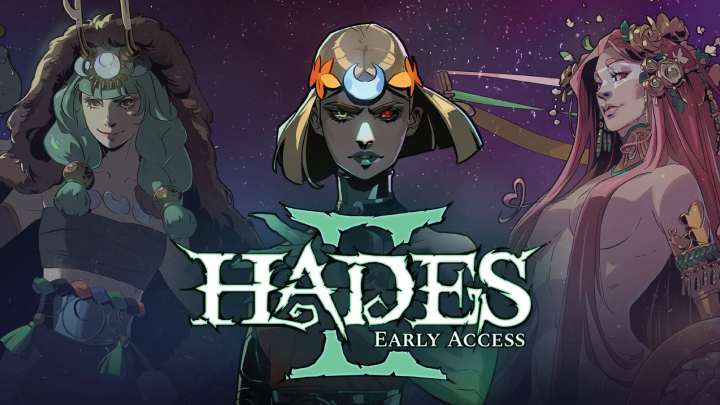
Hades II expands the roguelike structure of its predecessor in an important way: the player is not simply repeating one path while gradually improving the same collection of combat habits. Melinoë’s journey asks the player to think about routes, encounters, resources, weapons, Arcana, gods, boons, and longer-term build goals while constantly adapting to what each run provides. The game officially launched its v1.0 version on September 25, 2025, after more than a year of Early Access development, with additional late-game content and the true ending added for the full release.
That larger structure creates a very specific design problem. Hades II gives the player more opportunities to plan a build, but the more carefully a player plans, the more frustrating randomness can become. A run may begin with a clear idea of what the character needs, only for the available rewards to push that build in another direction. At the same time, blindly accepting every powerful-looking boon can produce a character that is individually strong but mechanically incoherent.
The interesting issue, then, is not whether Hades II has good builds or bad builds. It is how the game manages the tension between planning a build before a run and discovering a build during the run. That tension affects almost every important decision the player makes, from the first weapon selection to the final boss encounter.
The First Decision Creates a Plan Before the Run Even Begins
A Hades II run does not really begin when Melinoë enters the first combat room. It begins when the player chooses how they want to approach the attempt. Weapon selection, Arcana choices, keepsakes, and other preparation systems establish an initial direction before the player has seen the first meaningful rewards.
This is important because roguelikes traditionally depend on uncertainty. The player enters a run without knowing exactly which combination of upgrades will appear. Yet Hades II simultaneously gives the player tools that encourage deliberate preparation. The result is an unusual relationship between certainty and randomness.
A player might begin with a specific idea such as improving attack damage, building around Cast effects, emphasizing Omega moves, or trying to generate a particular status interaction. That initial goal provides structure. Without it, every reward can look equally attractive, making the run feel like a sequence of disconnected upgrades.
Preparation Is Not the Same as Commitment
The mistake is assuming that an initial plan must remain unchanged.
A useful run begins with a hypothesis:
- This weapon could benefit from faster attacks.
- This build might benefit from stronger Cast control.
- This setup may become powerful if a particular status effect appears.
- This Arcana combination could support a resource-heavy playstyle.
None of these ideas should be treated as a contract.
The player is effectively making a prediction about what the run might become. The first few rooms then provide evidence about whether that prediction is still practical.
Why This Matters
The preparation system makes Hades II feel more strategic than a purely random roguelike. But it also creates a psychological attachment to the intended build.
Once a player has decided what the run is supposed to become, an unexpected boon can feel like an interruption rather than an opportunity.
That is the first layer of the game's build-planning problem.
Early Boons Determine Whether the Original Plan Survives
The first meaningful rewards of a run are unusually important because they establish the direction of later decisions. Early boons do not necessarily determine the entire build, but they can influence which future options appear valuable.
This creates a form of early-run momentum.
Suppose the player begins with a weapon that has a fast attack pattern. An early boon that enhances that attack may immediately make the weapon feel stronger. The player now has a reason to continue searching for upgrades that support that behavior.
Another run might provide a powerful Cast-oriented reward instead. Suddenly, the optimal decision may involve using a different part of Melinoë's kit more aggressively.
Neither outcome is necessarily better. The important difference is that the player has started constructing a build identity.
The First Strong Synergy Is a Turning Point
There is usually a moment in a successful roguelike run when separate upgrades begin to feel connected.
Before that moment, the player has individual improvements.
After it, the player has a system.
For example:
- One upgrade improves a primary attack.
- Another makes enemies easier to control.
- A third improves damage against affected targets.
- A fourth increases the reliability of the resource needed to activate the strongest effects.
Individually, these upgrades may be ordinary.
Together, they explain how the character should be played.
The Problem With Chasing Synergy Too Early
The danger is that players can become too committed to synergy before enough information exists.
If the first two rewards suggest a particular strategy, the player may begin rejecting other options because they are mentally committed to completing the imagined build.
That can create a paradox:
The better the player understands build synergy, the more they may resist useful improvisation.
Hades II therefore needs the player to understand synergy without becoming trapped by it.
The Mid Run Is Where Adaptation Becomes More Important Than Planning
Once a run is underway, the original build concept begins to collide with reality.
The player has now seen several rewards. Some may support the intended strategy. Others may offer entirely different possibilities. Resources may also influence which rooms are attractive, while health, defenses, and current damage output determine how much risk the player can afford.
At this stage, the question changes.
Instead of asking:
“What build did I want?”
the player should increasingly ask:
“What build does this run actually allow me to make?”
That distinction is crucial.
The Run Starts Revealing Its Identity
A build can be thought of as having three stages:
- Intention
- Discovery
- Commitment
Intention happens before the run.
Discovery happens when the first important rewards appear.
Commitment happens when enough complementary upgrades have accumulated that changing direction becomes expensive.
The strongest runs often allow these stages to overlap rather than forcing the player to choose one.
When Adaptation Feels Good
Adaptation is satisfying when an unexpected reward reveals a strategy that the player could not have planned in advance.
For example, an initially mediocre-looking effect may become valuable after another reward changes how the player generates damage. Suddenly, the player realizes that two previously unrelated mechanics can interact.
That moment creates one of the best feelings a roguelike can offer:
“I didn't plan this, but now I understand it.”
The discovery is more memorable than simply following a predetermined build guide.
The Two Route Structure Changes What a “Good Build” Means
Hades II's larger structure introduces another complication. The game is not built around a single repetitive route in which every build faces exactly the same environmental sequence.
Melinoë's journey can involve different destinations and encounter structures, meaning that a build must function across more than one type of combat environment. Supergiant describes the sequel as having a larger and deeper mythic world with new locations, challenges, and upgrade systems.
This makes specialization more complicated.
A build that dominates one kind of encounter may have weaknesses elsewhere.
Different Environments Test Different Strengths
A build can be evaluated through several dimensions:
- Single-target damage
- Area control
- Mobility
- Resource management
- Defensive consistency
- Crowd control
- Burst damage
- Sustained damage
A highly specialized build may be exceptional in one category but uncomfortable in another.
That does not make specialization bad.
The issue is that the player may not know exactly which strengths will become most important later when making early decisions.
Route Choice Becomes Part of Build Evaluation
This means route selection is not only about rewards.
It is also about risk.
A player may choose an encounter because its reward is attractive, even though the combat environment is less comfortable for the current build. Another route may offer a less exciting reward but provide an easier combat sequence that helps stabilize the run.
This produces a subtle strategic question:
Should the player optimize the build, or protect the run?
The answer changes depending on the current state of the character.
Build Guides Can Accidentally Remove the Discovery Process
As with many complex roguelikes, experienced players can eventually learn which combinations interact particularly well. Community knowledge then makes it easier to identify powerful strategies.
This is useful for learning the game, but it changes the nature of decision-making.
A player who knows the intended combination may stop asking what the current run is offering and start asking how closely the current run resembles the known solution.
The Difference Between Knowledge and Discovery
Knowledge says:
“This effect is strong with this weapon.”
Discovery says:
“This effect suddenly became useful because of what happened earlier in this run.”
Both are valuable, but they create different experiences.
A highly knowledgeable player may complete runs more consistently, while a less knowledgeable player may experience more surprising interactions.
Neither experience is inherently superior. They simply emphasize different strengths of the roguelike structure.
Why Hades II Needs Some Uncertainty
If every powerful combination became obvious and predictable, the player would have less reason to experiment.
The strongest roguelike systems create a space where:
- Known synergies exist.
- Unknown interactions remain possible.
- Weak options can become useful under the right conditions.
- The player can recover from imperfect early decisions.
That final point is especially important.
A build should not collapse simply because the first few rewards were not ideal.
The Real Cost of Randomness Is Not Losing Power
Randomness is often described as a source of difficulty. But in Hades II, its more interesting effect is on decision confidence.
Imagine two runs.
In the first, the player immediately receives several upgrades that fit together. Every decision feels obvious.
In the second, the player receives unrelated effects. Nothing seems to connect.
The second run may still be winnable, but the player experiences more uncertainty.
That uncertainty has a cost.
When Randomness Creates Interesting Problems
Good randomness creates questions:
- Should I change my attack strategy?
- Is this defensive reward worth sacrificing offensive momentum?
- Should I prioritize resources or immediate power?
- Can this unusual effect become useful later?
- Should I take a safer room or chase a more valuable reward?
These are meaningful questions because the answer depends on context.
When Randomness Creates Noise
Bad randomness produces decisions where every option simply feels disconnected.
The player may eventually select the strongest numerical improvement because nothing else appears to matter.
At that point, the run becomes less about constructing a build and more about collecting isolated bonuses.
The distinction is subtle but important.
A roguelike does not need every reward to be synergistic. It needs enough potential connections that the player remains interested in looking for them.
The Late Game Tests Whether the Build Was Actually Coherent
The final stages of a run reveal whether the earlier decisions created a functioning system.
This is where weaknesses that were invisible during easier encounters can become obvious.
A build with excellent area damage may struggle against a durable target. A build focused on short bursts may become uncomfortable if an encounter requires sustained pressure. A setup that feels powerful under ideal conditions may become unreliable when movement and positioning become more demanding.
The late game therefore acts as an audit.
Damage Numbers Are Not the Whole Story
A successful build needs more than high damage.
It also needs consistency.
A useful late-game checklist includes:
- Can the build deal damage while moving?
- Can it recover from mistakes?
- Does it depend too heavily on one ability?
- Can it handle multiple enemies?
- Can it maintain its resource cycle?
- Does it have a reliable answer to dangerous attacks?
These questions reveal whether the build is genuinely coherent.
The Most Important Statistic Is Sometimes Reliability
A slightly weaker build that functions consistently can outperform a theoretically stronger setup that only works under perfect conditions.
This is especially important in a roguelike because every run has different variables.
A build that requires a precise sequence of events can be exciting, but it may also become fragile.
Hades II's combat rewards adaptation, so the strongest practical builds are often those that give the player several ways to solve a problem.
The End of a Run Changes the Meaning of Everything That Came Before
When a run ends successfully, the player can look backward and reconstruct the decisions that produced the final build.
This is one of the most important storytelling mechanisms in a roguelike.
The run becomes a small narrative:
I started with this weapon.
Then I found this effect.
That made another upgrade valuable.
I changed how I used my Cast.
Later, another reward completed the interaction.
By the end, the character was doing something I had not expected at the beginning.
The run becomes memorable because the build has a history.
Failure Creates the Same Narrative in Reverse
A failed run can also contain valuable information.
Perhaps the player became too dependent on one damage source. Perhaps they ignored defensive tools because the early rooms felt easy. Perhaps they committed to a strategy before seeing enough rewards.
The important question after failure is not simply:
“What killed me?”
It is:
“When did the build stop giving me good answers?”
That question produces much more useful information.
The Best Solution Is Not Removing Randomness
The tension between planning and improvisation is not something Hades II should necessarily eliminate.
It is part of what makes the game a roguelike.
The more interesting solution is to make the relationship between the two clearer.
Players should be able to enter a run with an idea, discover something unexpected, and still have enough flexibility to incorporate that discovery.
A Healthy Build Progression Looks Like This
Starting concept → early signal → adaptation → synergy → refinement → final specialization
The starting concept gives the player direction.
The early signal tells them whether the idea is viable.
Adaptation prevents the player from becoming trapped.
Synergy makes the build feel coherent.
Refinement improves consistency.
Final specialization gives the run its identity.
This structure is more satisfying than either extreme.
A completely predetermined run removes discovery.
A completely random run removes strategic intention.
The ideal space exists between them.
Why Flexibility Matters More Than Perfection
A player does not need to find the perfect combination to have a successful run.
They need enough tools to solve the problems the game presents.
That distinction makes imperfect rewards more interesting.
A reward does not have to be the best possible option.
It only needs to create a useful decision.
Hades II Turns Build Planning Into a Test of Player Judgment
The deeper issue with Hades II's build system is therefore not balance in the traditional sense.
It is judgment.
The player constantly decides how much to trust the original plan and how much to trust the evidence appearing during the current run.
That makes build construction a form of real-time reasoning.
The Player Is Constantly Updating a Hypothesis
At the beginning:
“I think this approach will work.”
After several rooms:
“The available rewards are pushing me somewhere else.”
Later:
“This new combination seems stronger than my original idea.”
Near the end:
“Now I need to make this build reliable enough to survive the final challenge.”
That process is what gives individual runs their identity.
The Most Valuable Skill Is Knowing When to Change
Changing builds too frequently can prevent synergy from developing.
Refusing to change can make a weak build progressively harder to repair.
The player therefore needs to recognize the moment when adaptation becomes more valuable than commitment.
That moment is different in every run.
And that is precisely why the system works.
Conclusion
Hades II's most interesting build problem is not that the game gives players too many choices. It is that the game asks them to balance two competing forms of decision-making: planning what they want and responding to what they actually receive.
The preparation systems encourage players to enter a run with an idea. Weapons, Arcana, keepsakes, and other choices create an initial direction. But the run itself constantly introduces new information through rewards, encounters, resources, and route decisions. The player must therefore decide whether to continue pursuing the original strategy or reinterpret the run.
That tension becomes more significant because Hades II has a broader structure than a simple single-route progression loop. Different environments and challenges can test different strengths, meaning that a build cannot be judged purely by its theoretical damage potential. Consistency, mobility, resource management, defensive options, and adaptability can all determine whether a strategy remains effective.
The greatest danger is overplanning. Once players learn powerful synergies, they may begin treating every run as an attempt to reproduce a known solution. That can make unexpected rewards feel like obstacles rather than opportunities. But the opposite extreme is also problematic. If players simply accept every strong-looking reward without considering how the pieces interact, the build can become a collection of unrelated bonuses rather than a coherent system.
The strongest Hades II runs exist between those extremes.
A player begins with a plan, receives unexpected information, adapts, discovers a synergy, and eventually commits to the strategy that the run has revealed. The final build is therefore not simply something the player selected at the beginning. It is something the player gradually discovered.
That is the deeper strength of Hades II's roguelike structure. The game does not merely ask whether the player knows the strongest combination. It asks whether the player can recognize opportunity when the perfect combination never appears.
The most memorable run is often not the one where everything went according to plan.
It is the one where the plan changed, the player understood why it changed, and the resulting build became something better than the original idea.