Top 4 Roblox Games You Must Play in 2025 – Full Analysis, Progression & Guides
INTRODUCTION & GAME SELECTION CRITERIA
Roblox is a massive ecosystem of user-generated games, but only a few titles manage to sustain long-term player interest, demonstrate strong design principles, and build communities that remain active for years. The four games analyzed in this guide represent different genres but share the same core strengths: deep replay value, strong progression loops, stable long-term updates, and gameplay systems that reward mastery instead of repetitive grinding.
The selection criteria for these four games include mechanical depth, content longevity, player accessibility, difficulty scaling, gameplay variety, and world design. Each game is dissected using a professional framework similar to analysis used in mainstream game studies: systems design, progression curve, player psychology, meta structure, difficulty pacing, and retention mechanisms.
This guide focuses not only on reviewing the games but also on explaining how they work, how players should progress, the strategies that reduce grind time, and the mechanics that determine long-term skill growth. Each section includes a breakdown of progression, combat or interaction loops, exploration structure, and late-game systems. The goal is to provide both casual and competitive players with a complete understanding of why these games stand out.
The four games chosen cover four major Roblox genres: survival crafting, dungeon RPG, open-world social sandbox, and combat-driven action. Each represents a different type of player experience, ensuring that this analysis fits multiple player preferences.
GAME 1: THE FORGE (Survival / Crafting / Exploration)
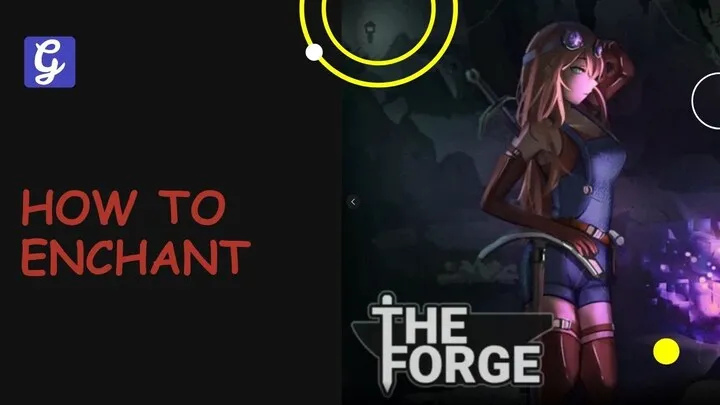
The Forge embodies the survival-crafting experience on Roblox, coupling resource management, biome progression, and combat-oriented exploration into a cohesive loop. What elevates it above many survival games is its consistent escalation: players are pushed into tougher biomes not through linear requirements but through resource scarcity. To craft better tools, players must enter more dangerous areas—and doing so forces them to improve their combat skills.
1. Progression Structure
The early game introduces players to stamina, gathering tools, and basic combat rhythm. Wooden and stone tools teach players how resource tiers work and establish the crafting chain that fuels the rest of the game. Mid-game introduces metal alloys and environmental resistances, which act as natural gates. Late-game focuses heavily on corrupted zones that test movement, timing, and precision.
2. Combat and Build Design
Combat in The Forge rewards measured aggression. Enemies have clear telegraphs, and understanding them is crucial. Build types emerge through weapon categories: fast mobility builds, heavy burst builds, defensive sustain builds, and hybrid mixed-style builds. Each biome favors different weapons, pushing players to diversify.
3. Crafting and Resource Flow
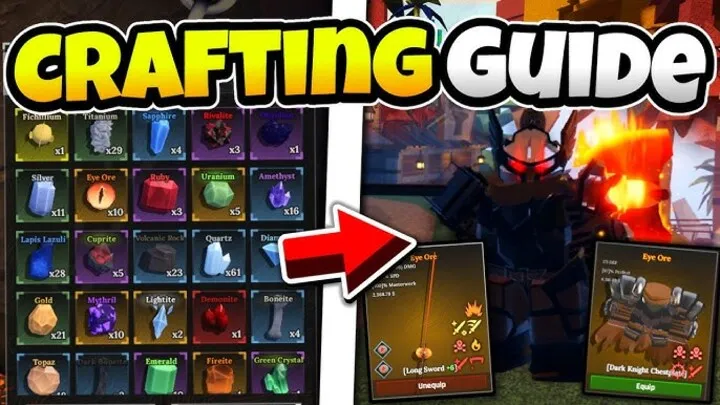
Crafting is the spine of the game. Ore rarity increases with biome difficulty, and players must learn efficient farm routes. Inventory management becomes essential in the late-game, where crafting recipes require materials from multiple biomes.
4. Exploration and Biomes
The game’s biome structure is a progression ladder. Frost regions teach stamina control; volcanic areas teach spacing; corrupted lands demand mastery. Each biome also hides secret routes, caves, resource pockets, and optional mini-bosses that accelerate progression.
5. Endgame Identity
Once players craft top-tier gear, the game transitions from survival to mastery. The real challenge becomes speed, efficiency, and optimal routing. The Forge retains players because there is always something to refine, whether that is a better build, a faster resource loop, or a more efficient combat approach.
GAME 2: DEEPHALLS (Dungeon RPG / Combat Focus / Gear Progression)
Deephalls represents one of Roblox’s strongest attempts at a structured dungeon-based RPG. Instead of an open world, Deephalls emphasizes instance-based exploration where players gradually descend through increasingly difficult dungeon floors.
Where The Forge rewards exploration planning, Deephalls rewards combat execution. Every enemy function is tied to a specific pattern, and higher-tier dungeons introduce layered attack combinations that test spacing, rhythm, and reaction.
1. Progression Curve
Players begin with lightweight gear that teaches timing and stamina control. Early dungeons introduce slow, predictable enemies that help players learn movement fundamentals. By mid-game, enemies begin chaining attacks, forcing players to dodge instead of tanking hits. Late-game content emphasizes precision.
The leveling curve is slow by design. Instead of power coming from raw stats, much of the player’s strength comes from knowledge—the ability to recognize enemy patterns, position properly, and use invulnerability frames efficiently.
2. Gear and Build Systems
Gear types define builds:
• light weapons for fast attack chains,
• heavy weapons for high burst,
• hybrid weapons for flexible engagements.
Armor sets also matter. Lightweight armor improves mobility, while heavier sets allow players to survive mistakes. Accessories create variations: crit builds, stamina builds, tank builds, and ability-focused builds.
3. Dungeon Design
Each floor is handcrafted with unique layouts, puzzles, and enemy groups. Enemy placement is intentional—corridor ambushes favor heavy burst builds, while open chambers favor mobility. Higher-tier floors add traps, environmental hazards, and elite enemy variants.
Bosses anchor major progression jumps. Their attack patterns are more complex and require mastery of iframe timing. Defeating bosses unlocks recipes for rare equipment.
4. Endgame & Replayability
Endgame focuses on challenge modes, time-trial floors, and rare gear drops. Players return to older dungeons for materials, speedrunning practice, or to perfect builds. The game’s design rewards mechanical skill over raw grind, giving Deephalls strong lasting power.
GAME 3: EMPIRE REALMS (Open-World Sandbox / Social Interaction / Player Economy)
Empire Realms targets a different audience: players who enjoy freedom, creativity, building systems, trading, and social community development. While The Forge and Deephalls emphasize combat, Empire Realms emphasizes world-building and economy.
1. Progression Through Creativity
Players start with limited building options, but the game immediately introduces resource gathering, land acquisition, structure development, and basic economy. Progression is nonlinear; players can focus on construction, trading, exploration, or social collaboration.
The building system is modular, allowing advanced designs. Some players specialize in aesthetics, others in functional resource farms. Creativity becomes its own progression metric.
2. Economic Systems
Empire Realms includes one of Roblox’s most stable player-driven economies. Supply and demand influence prices of building materials, crafted items, and rare goods. Players who understand market timing earn far more resources than those who rely solely on farming.
Advanced players create automated or semi-automated production chains. Trading hubs allow players to specialize: miners sell to builders; builders sell to traders; traders sell to large-scale city creators.
3. Exploration and Territory Expansion
Unlike linear dungeon games, Empire Realms features an open-world map with scattered resource zones. The further players travel, the rarer the resources become. This design rewards long-term planning, transportation routes, and safe storage systems.
Territory expansion becomes a late-game mechanic. Players build outposts, create transport lines, and cooperate in large community projects.
4. Endgame Identity
Empire Realms does not have a traditional “ending.” Instead, progression becomes mastery of economy, construction, logistics, and long-term collaboration. Social interaction becomes a central mechanic, giving the game exceptional replay longevity.
GAME 4: ARCANE ODYSSEY (Action Combat / Story / Ability Builds)
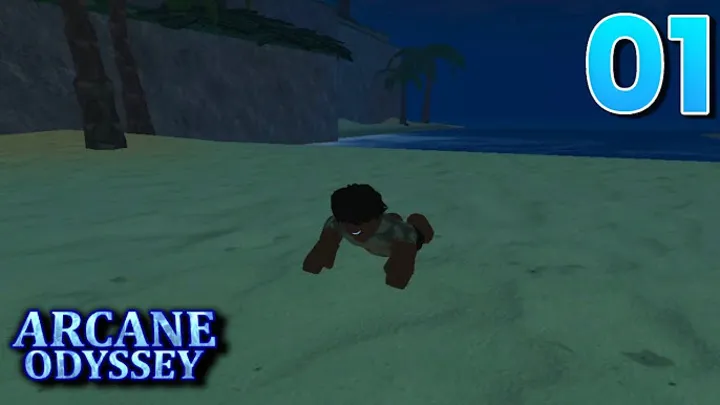
Arcane Odyssey stands out as one of Roblox’s most ambitious action-RPG titles. Combining open-world exploration, story-driven quests, fast-paced combat, and build crafting, it delivers a near-AAA experience within Roblox’s engine limitations.
1. Combat System
Combat is fluid, fast, and ability-driven. Players choose magic types, weapon paths, or hybrid builds. Timing, spacing, and energy management determine success. Unlike many Roblox action games, Arcane Odyssey rewards learning combos and controlling engagement distance.
2. Story & World Structure
The game includes a full narrative arc supported by major quests, faction systems, and regional conflicts. Each island presents unique enemies, materials, and traversal mechanics. Exploration encourages players to constantly try new builds.
3. Build Variations
Magic builds emphasize ranged combat.
Weapon builds emphasize aggression and melee burst.
Hybrid builds allow players to adapt to different encounters.
Late-game builds introduce advanced spell combinations, status effect chaining, and movement-oriented abilities.
4. Progression & Endgame
Players unlock new islands, dungeons, and bosses as they progress. Endgame introduces advanced quests, rare gear farming, regional control mechanics, and boss challenges. The variety of encounters ensures long-term replay value, especially for players who enjoy mastering complex combat systems.
FINAL CONCLUSION
These four Roblox games represent four pillars of long-form gameplay design: survival mastery, dungeon skill refinement, economic creativity, and action-combat depth. Each game rewards a different type of player, but all share the qualities of strong progression systems, meaningful player choices, and long-term replayability.
The Forge rewards strategic exploration.
Deephalls rewards mechanical precision.
Empire Realms rewards creative and economic thinking.
Arcane Odyssey rewards combat mastery and build experimentation.
Together, they form a complete snapshot of what high-quality Roblox design looks like today. Players seeking depth, challenge, creativity, or long-term mastery will find each of these titles offering a rich experience that goes far beyond typical Roblox gameplay loops.
THE FORGE: ADVANCED SYSTEM ANALYSIS
The Forge becomes significantly more complex once players move beyond basic crafting and combat. While the early game teaches the fundamental rhythm of stamina and resource exchange, the late game shifts into a strategic optimization challenge. Players must balance risk, time, durability, and resource scarcity.
1. Late-Game Biome Psychology
High-tier biomes in The Forge are deliberately punishing. Their design uses environmental discomfort to push players into a focused state. Frost regions tax stamina, volcanic zones punish stillness, and corrupted lands punish greed. Every biome is designed to teach restraint.
The game’s biome layout is also implicitly educational. Each zone introduces a mechanic that future zones escalate. For example, frost enemies use burst movement to mimic corrupted enemies, preparing players long before they reach the hardest areas.
2. Hidden Combat Layers
The Forge’s combat looks simple but contains multiple hidden layers:
• animation cancel windows,
• spacing-based damage advantages,
• hitbox manipulation,
• stamina rhythm loops,
• enemy pattern breakpoints.
Experienced players learn that every weapon has an “efficiency curve.” Fast weapons reward consistent precision; heavy weapons reward perfect timing; hybrid weapons reward adaptation. Late-game combat mastery depends on reading micro-animations and reacting before telegraphs fully appear.
3. Resource Logistics Optimization
Players who want to optimize late-game progression must study resource logistics:
• identifying biome to biome loops,
• reducing tool durability waste,
• mapping ore respawn timers,
• balancing risk vs. yield in corrupted zones.
A fully optimized loop cuts progression time by as much as 60 percent. This is why veteran players progress so rapidly: they don’t wander, they route.
4. Community-Level Strategies
At the highest level, The Forge becomes a community-driven game. Players share routes, builds, cave locations, mini-boss spawn behaviors, and secret biome transitions. This collective knowledge transforms the game into a competitive efficiency challenge, even without PvP mechanics.
DEEPHALLS: ADVANCED DUNGEON & COMBAT META
Deephalls appears simple at first, but its depth becomes clear when players climb higher dungeon floors. It gradually transitions from a casual hack-and-slash into a mechanical test similar to traditional action RPGs.
1. High-Floor Enemy Behavior
High-tier enemies use layered attack patterns, including:
• delay feints,
• multi-hit combos,
• chase-down attacks,
• tracking projectiles,
• stagger windows.
Players must learn not only attack timing but escape timing. Deephalls encourages reactive gameplay rather than proactive aggression.
2. Build Synergy Theory
The deepest part of the game lies in build synergy. A build is determined not only by weapons but:
• armor class,
• mobility type,
• accessory loadout,
• stamina management,
• iframe windows.
Players who stack mobility can avoid almost everything but deal less burst. Heavy builds reduce mistakes but punish mispositioning. Hybrid builds balance both but require sharper judgment to use effectively.
3. Boss Layered Design
Bosses in Deephalls use a three-phase method:
• Recognition phase – players identify telegraphs
• Pressure phase – bosses mix patterns
• Endurance phase – bosses speed up or add hazards
This multi-phase progression teaches adaptability. The game rewards players who learn patterns deeply instead of relying on stat advantages.
4. Endgame Replay Structure
The late-game loop focuses on mastery:
• time trials,
• optimized runs,
• pattern memorization,
• build perfecting.
This turns Deephalls into a skill-based experience that consistently rewards improvement.
EMPIRE REALMS: ADVANCED ECONOMY & SYSTEM DESIGN
Empire Realms contains the deepest economic system among Roblox sandbox games. What appears casual becomes a strategic challenge once players enter mid to late-game.
1. Economic Simulation
The game simulates supply–demand cycles through:
• raw resource scarcity,
• crafted item value dependency,
• player-driven pricing,
• market saturation,
• timing-based trades.
Players who understand these factors dominate the economy. They buy low, sell high, and anticipate market shifts.
2. Construction Efficiency Theory
Building is not just creative—it is systemic. Efficiency depends on:
• material cost optimization,
• foundation stability,
• modular repetition,
• transport infrastructure,
• storage distribution.
Late-game cities often use industrial-style layouts to reduce resource waste.
3. Social Systems
Empire Realms is built on collaboration. Social mechanics include:
• resource exchange networks,
• cooperative building,
• community mega-projects,
• transport sharing,
• trading guilds.
Late-game success is nearly impossible without understanding the social meta.
4. Territorial Expansion Meta
Advanced players expand across multiple regions. They create interconnected outposts and utilize biome-specific resource specialization. This transforms Empire Realms from a sandbox into a logistical strategy game.
ARCANE ODYSSEY: MASTER-LEVEL COMBAT & MAGIC THEORY
Arcane Odyssey’s complexity increases exponentially as players begin experimenting with magic interactions, weapon synergies, and movement tech.
1. Ability Interaction Depth
Magic types interact through mechanics such as:
• elemental amplification,
• status effect combos,
• area denial,
• projectile spacing,
• cooldown timing.
Fire + Explosive magic, for example, creates burst windows. Wind magic enhances knockback-based playstyles.
2. Movement & Spacing
The game rewards players who master:
• dash timing,
• vertical repositioning,
• cancel windows,
• gap closing,
• stutter movement.
High-level combat becomes a spacing battle rather than a DPS race.
3. Hybrid Build Theory
Hybrid builds allow players to:
• switch roles mid-fight,
• adapt to enemy resistances,
• chain melee and ranged combos.
These builds require both mechanical precision and predictive timing.
4. Exploration Depth
Islands contain secrets, rare spawn materials, vertical traversal routes, and hidden bosses. The world encourages thorough exploration, rewarding players with rare items that drastically improve build potential.
META COMPARATIVE ANALYSIS (DEPTH EXPANSION)
The four games share universal design pillars, but each excels in different areas.
The Forge excels in environmental mastery.
Deephalls excels in mechanical execution.
Empire Realms excels in creativity and economy.
Arcane Odyssey excels in combat complexity and exploration.
Comparing their endgames reveals four philosophies:
• Survival mastery (The Forge)
• Combat perfection (Deephalls)
• Social-economy dominance (Empire Realms)
• Build and ability optimization (Arcane Odyssey)
Players gravitate toward the game that aligns with their personal psychology and learning style.
EXTENDED CONCLUSION
These four games represent the highest-quality design philosophies on Roblox today. Their depth, complexity, and progression structures rival full-featured commercial titles. What makes them exceptional is not the surface-level gameplay but the layers beneath:
• Their systems are interconnected.
• Their progression curves reward mastery.
• Their difficulty pacing is intentional.
• Their endgames emphasize identity and specialization.
• Their replay value is derived from learning, not grinding.
Whether a player wants tactical combat, creative building, economic strategy, or exploration-based play, one of these games provides a world deep enough to dive into for hundreds of hours.
PLAYER PSYCHOLOGY, RETENTION DESIGN & LONG-TERM META ENGAGEMENT
The top Roblox games do not rely on luck or random virality. Their success is built on deep psychological principles, long-term progression hooks, replay-oriented systems, and design philosophies that stimulate the player’s sense of growth and identity. This section explains exactly how and why the four games — The Forge, Deephalls, Empire Realms, and Arcane Odyssey — maintain strong player retention and continue to expand their communities.
1. Core Player Psychology Frameworks
Every successful long-term game aligns with fundamental psychological motivators. These motivators can be divided into several categories:
1. Competence
Players want to feel improvement.
• The Forge provides competence through biome mastery and efficient routes.
• Deephalls provides competence through skill growth and pattern recognition.
• Empire Realms provides competence through construction mastery and economic success.
• Arcane Odyssey provides competence through learning combat combos and magic interactions.
Competence-based hooks are the strongest long-term motivators. Players return not for rewards but to continue sharpening their abilities.
2. Autonomy
Autonomy refers to freedom of choice.
• Empire Realms offers the highest autonomy through free-form building and economic decisions.
• Arcane Odyssey offers autonomy in build path selection.
• The Forge offers autonomy in routing and biome order.
• Deephalls offers autonomy through build selection and combat style.
When players feel ownership over their choices, they invest emotionally in their progress.
3. Relatedness
Humans are motivated by connection.
• Empire Realms thrives due to its social economy.
• Deephalls develops a shared culture of skill learning.
• The Forge has community-driven discovery of routes, builds, and farming methods.
• Arcane Odyssey builds communities around PvE and build discussion.
Games that nurture social bonds retain players far longer.
4. Mastery-State Flow
Flow occurs when difficulty matches the player’s skill level.
• The Forge balances environmental danger with progression.
• Deephalls slowly raises mechanical difficulty.
• Arcane Odyssey offers increasingly complex combat scenarios.
• Empire Realms scales with player ambition, not preset difficulty.
Flow-state design keeps players deeply engaged for long sessions.
2. Retention Mechanics Hidden in Each Game
These games carefully implement retention loops that keep players coming back.
1. Short-Term Loops
Short-term loops give daily satisfaction:
• quick material runs (The Forge),
• short dungeon floors (Deephalls),
• small building expansions (Empire Realms),
• quick quest completions (Arcane Odyssey).
These provide immediate feedback.
2. Mid-Term Loops
Mid-term loops take hours or days:
• crafting new tiers of equipment,
• unlocking new regions,
• building larger structures,
• acquiring powerful spells or abilities.
These loops maintain weekly engagement.
3. Long-Term Loops
Long-term loops keep players invested for months:
• optimizing routes,
• perfecting builds,
• mastering social economies,
• dominating late-game combat or exploration.
These loops give games longevity beyond simple updates.
3. Emotional Design & Player Identity
The strongest retention tool is identity. When players feel the game reflects something about them, they stay.
The Forge
Players identify as efficient explorers, survival strategists, or biome specialists. Their identity is tied to mastery of dangerous zones.
Deephalls
Players identify through skill. They become “pattern masters,” “speedrunners,” or “perfect-dodge players.” This creates pride.
Empire Realms
Identity emerges from creativity and influence:
• city builders,
• traders,
• architects,
• logistics planners.
Their work is visible to others, reinforcing prestige.
Arcane Odyssey
Players identify through builds and combat styles:
• fire-focused battlemages,
• melee bruisers,
• hybrid spell-blade fighters.
Build identity creates emotional investment.
4. Difficulty Scaling & Player Challenge Curve
The four games differ in execution but share similar philosophy: difficulty must increase alongside player capability.
The Forge
Difficulty comes from environment and enemy speed. Players evolve from cautious explorers to biome conquerors.
Deephalls
Difficulty escalates through layered patterns. The game becomes a mechanical duel of reaction time and precision.
Empire Realms
Difficulty is self-imposed: bigger cities, larger ambitions, deeper trade networks. Players raise their own bar.
Arcane Odyssey
Difficulty escalates through enemy mechanics, multi-phase bosses, and movement complexity. Players evolve into technical fighters.
A strong difficulty curve maintains player interest without overwhelming newcomers.
5. Endgame Longevity Through Meta Evolution
A game dies when players run out of meaningful goals. These four games avoid that through dynamic meta design.
The Forge
The meta comes from routing, efficiency, biome progression, and community-discovered mechanics. The endgame is endless refinement.
Deephalls
The meta comes from:
• pattern optimization,
• build experimentation,
• speedrunning,
• high-floor dungeon rotations.
Competitive skill pushes longevity.
Empire Realms
The meta evolves with economy changes. Player markets fluctuate naturally, meaning the endgame is infinite.
Arcane Odyssey
Magic combinations, build interactions, gear farming, and ability synergy keep the combat meta alive indefinitely.
6. Why These Games Stand Above Typical Roblox Titles
Most Roblox games fail because they rely on gimmicks. These four succeed because they use robust game design principles:
Clear progression structure
Strong difficulty curve
Meaningful choices
Player-driven goals
Replay-oriented gameplay
Community-oriented mechanics
Identity and mastery focus
Long-term meta evolution
In other words, these games behave like full-scale RPGs or survival titles, not quick-project Roblox minigames.
7. How Players Grow Across the Four Games
A player who plays all four will experience four different kinds of growth:
• cognitive growth (strategy in Empire Realms),
• mechanical growth (combat in Deephalls),
• survival instinct and optimization (The Forge),
• action-combat mastery and timing (Arcane Odyssey).
These games complement each other, forming a complete portfolio of player development.
FINAL EXTENDED CONCLUSION
The Forge, Deephalls, Empire Realms, and Arcane Odyssey represent the pinnacle of what Roblox can offer. They are not just popular—they are well-designed, deeply layered, and psychologically compelling. Their systems work together to create experiences that are both accessible to newcomers and endlessly engaging to veterans.
These games keep players returning for the same reason major AAA titles succeed:
• mastery feels rewarding,
• progression feels meaningful,
• challenges scale appropriately,
• freedom allows creativity,
• identity creates emotional investment,
• and the meta evolves with the community.
For players who want depth, longevity, and a sense of constant improvement, these four games offer some of the richest experiences on the Roblox platform.
Conclusion: The Forge’s Position in Roblox’s Evolving Game Landscape
Roblox: The Forge stands as one of the clearest examples of how rapidly the Roblox ecosystem is evolving. While the platform was once known mainly for simple, low-fidelity minigames, The Forge pushes toward a new era where Roblox experiences begin to resemble fully developed action titles—with structured progression, complex crafting, cooperative combat, and a far more mature visual direction.
Its core loop—explore, fight, craft, upgrade—remains universally appealing, and the game’s consistent updates show that the developers understand how to maintain long-term retention. With players increasingly demanding deeper gameplay and longer engagement value, The Forge successfully positions itself as a hybrid between traditional Roblox fun and modern RPG mechanics.
The path forward is wide open. If the developers continue expanding world regions, enhancing enemy encounters, refining the skill system, and adding more social or competitive layers, the game has the potential to become one of Roblox’s next major flagship titles. For players seeking a more “serious” but still accessible adventure, The Forge delivers exactly that: a dynamic, cooperative, endlessly replayable world where every session feels like meaningful progress.
The Forge is not just another Roblox game—it’s a demonstration of how ambitious creators are redefining what can exist within the platform. And as Roblox continues to grow, experiences like this will shape the future of the entire ecosystem.