






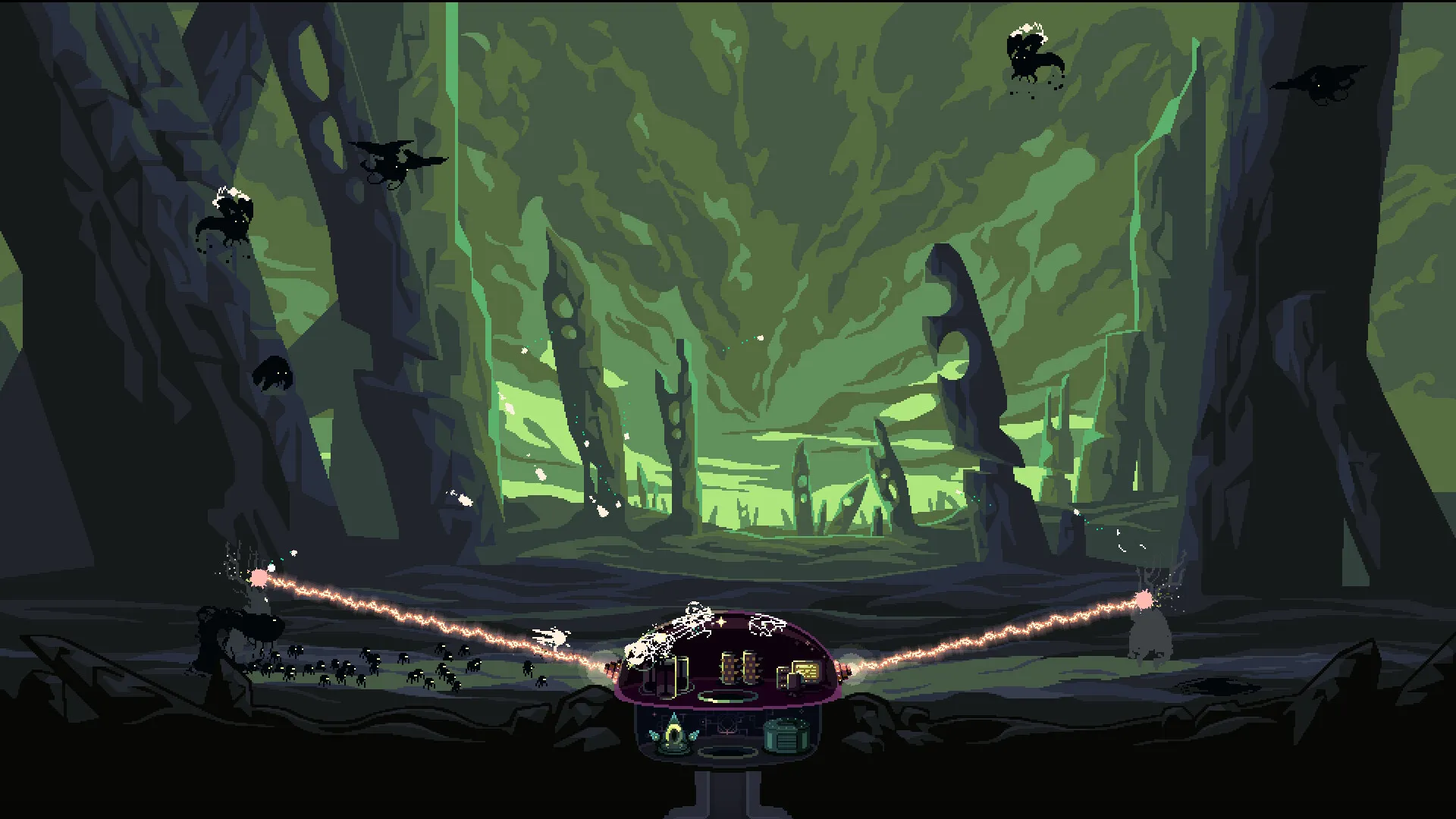
Dome Keeper, developed by Bippinbits, is often described as a simple loop: mine resources underground, return to your dome, and defend it against waves of alien creatures. Its surface appeal lies in the satisfying rhythm between excavation and defense, reinforced by procedural maps and incremental upgrades.
However, beneath this elegant loop lies a less obvious but deeply influential system: oxygen and movement economy. While players may initially focus on mining efficiency or combat upgrades, long-term success is largely determined by how effectively they manage distance, travel time, and oxygen constraints.
This article examines a specific issue in Dome Keeper: how oxygen-limited movement creates an invisible optimization problem that dominates player decisions, often overshadowing combat skill and strategic diversity. Over time, the game becomes less about fighting enemies and more about solving a spatial efficiency puzzle under strict time pressure.
1. The Basic Loop: Mine, Return, Defend
At its core, Dome Keeper operates on a repeating cycle:
- Descend underground to mine resources
- Return to the dome before oxygen runs out
- Use resources to upgrade defenses
- Survive incoming waves
H3: Early Simplicity
In the opening minutes, the system feels forgiving. Mining distances are short, and players can explore freely.
H4: Oxygen as a Soft Limit
Oxygen exists, but it rarely feels restrictive early on. Players assume it is a minor mechanic rather than a central constraint.
This perception changes quickly.
2. The Expansion Problem
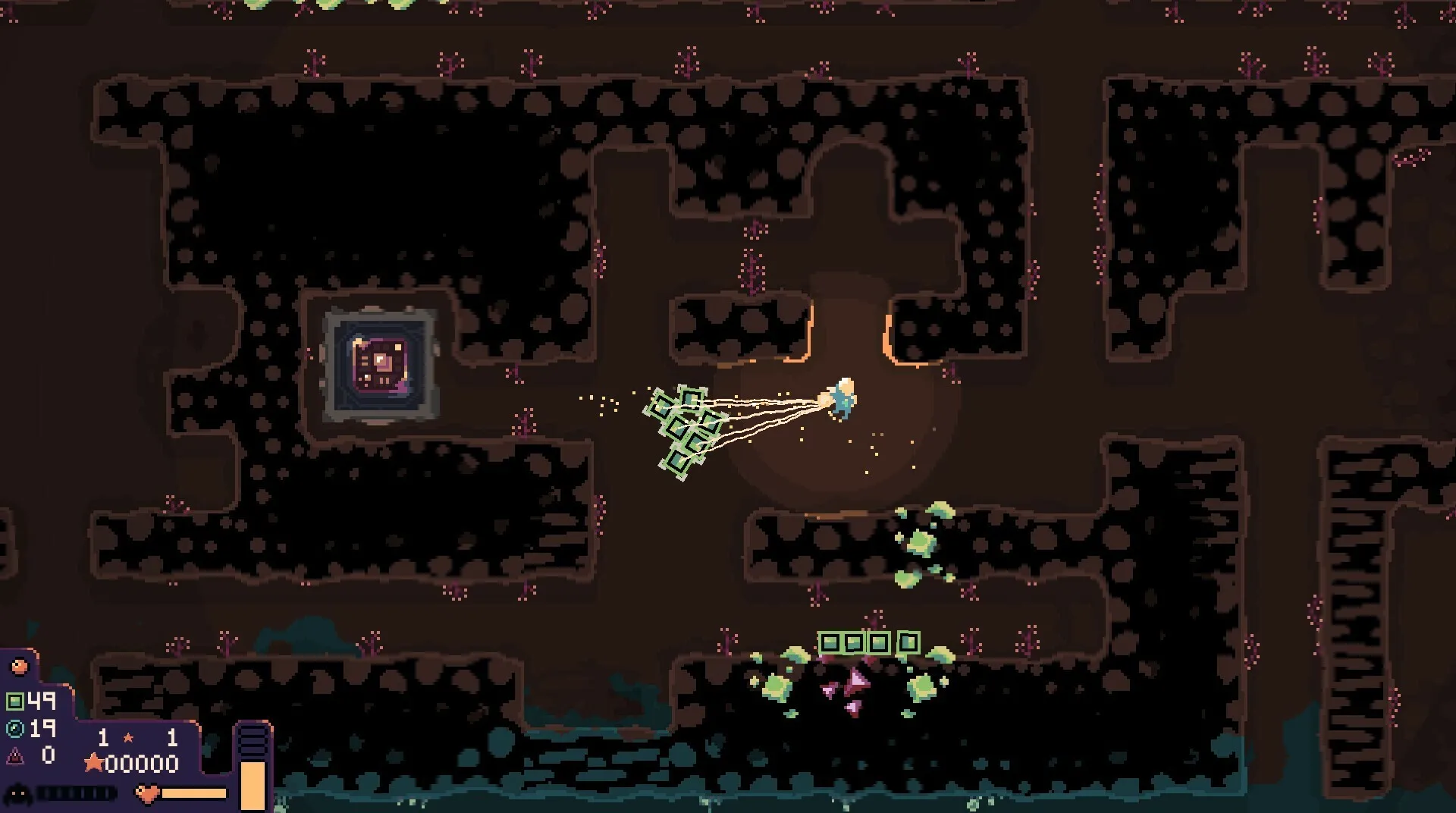
As players dig deeper and wider, the map expands.
H3: Distance Growth
Each excavation increases:
- Travel distance back to the dome
- Time required to transport resources
- Risk of oxygen depletion
H4: Hidden Cost of Exploration
Exploration feels rewarding, but every new tunnel adds future movement cost.
Players begin to realize that digging is not just about finding resources—it’s about committing to long-term travel inefficiency.
3. Oxygen as a Hard Constraint
Eventually, oxygen stops being a background mechanic and becomes a hard limit.
H3: Time Pressure Underground
Players must constantly monitor:
- Remaining oxygen
- Distance to the dome
- Load weight affecting movement speed
H4: Decision Compression
Instead of exploring freely, players must:
- Abandon resources mid-trip
- Turn back early
- Avoid deeper tunnels
Oxygen transforms exploration into a calculated risk.
4. Movement Speed and Weight Mechanics
Movement in Dome Keeper is affected by both upgrades and carried resources.
H3: Resource Weight Impact
Carrying materials slows movement, increasing oxygen consumption.
H4: Trade-Off Decisions
Players must choose between:
- Carrying more resources per trip
- Returning faster with lighter loads
List – Common Trade-Off Choices
- Heavy load, high efficiency, high risk
- Light load, low efficiency, low risk
- Dropping resources temporarily
- Creating resource caches underground
Every decision revolves around movement economy.
5. Tunnel Design as Strategy
Over time, players begin designing tunnels intentionally rather than randomly.
H3: Path Optimization
Efficient tunnel systems include:
- Straight vertical shafts
- Minimal horizontal detours
- Direct routes to key resources
H4: Structural Planning
Players may reshape tunnels to:
- Reduce travel time
- Improve navigation
- Minimize oxygen consumption
The game becomes an exercise in spatial optimization.
6. Combat Neglect in Favor of Movement Efficiency
Interestingly, the importance of movement often overshadows combat upgrades.
H3: Resource Prioritization
Players may prioritize:
- Movement speed upgrades
- Carry capacity
- Oxygen efficiency
over:
- Weapon damage
- Shield strength
H4: Indirect Survival Strategy
Instead of improving combat ability, players survive by:
- Returning faster
- Upgrading earlier
- Avoiding inefficient trips
Movement becomes the foundation of survival.
7. The Mid-Game Stress Point
In mid-game, the tension between mining depth and survival peaks.
H3: Increasing Complexity
Players must manage:
- Multiple resource types
- Deeper excavation zones
- Faster enemy waves
H4: Cognitive Load
Simultaneously tracking oxygen, distance, and time creates mental pressure.
Mistakes often occur not in combat, but in navigation decisions.
8. Late-Game Map Sprawl
By late game, the underground map becomes massive.
H3: Travel Fatigue
Long distances result in:
- Frequent oxygen emergencies
- Abandoned resources
- Inefficient trips
H4: System Breakdown
Even optimized tunnels can struggle under scale.
Players may feel trapped by their own earlier excavation decisions.
9. Player Psychology and Perceived Control
The dominance of movement economy affects how players perceive the game.
H3: Invisible Difficulty
Players may blame:
- Enemy difficulty
- Resource scarcity
when the real issue is inefficient movement.
H4: Learning Curve
Mastery involves understanding that:
- Movement efficiency > resource quantity
- Planning > reaction
- Structure > improvisation
This realization often comes late.
10. The Core Design Tension
Dome Keeper’s design creates a conflict between exploration freedom and movement efficiency.
H3: Strengths of the System
Oxygen and movement constraints:
- Add tension
- Encourage planning
- Create meaningful trade-offs
H4: Structural Limitation
However, they also:
- Discourage creative exploration
- Punish early mistakes permanently
- Reduce build diversity
List – Potential Improvements
- Tools for tunnel restructuring
- Dynamic oxygen upgrades
- Late-game fast travel options
- Reduced penalty for inefficient layouts
Balancing freedom and efficiency is key.
Conclusion
Dome Keeper appears to be a game about defending a dome against alien threats. Yet beneath its surface lies a deeper challenge: managing the invisible economy of movement and oxygen.
As players progress, they learn that success depends less on combat skill and more on spatial planning and efficient navigation. Every tunnel dug, every resource carried, and every second spent underground contributes to a complex optimization problem that defines the entire experience.
The brilliance of Dome Keeper lies in how subtly it introduces this system. The danger is that it can overshadow other aspects of gameplay, narrowing player strategy into a single dominant focus.
Ultimately, Dome Keeper is not just a defense game—it is a game about distance, time, and the cost of moving through space.