





Gorilla Tag is a virtual reality multiplayer game that removes traditional movement controls and replaces them with raw physical motion. By forcing players to move using only their arms, the game delivers a uniquely immersive experience. This article explores how Gorilla Tag works, why it feels so different from other VR games, and what keeps players coming back.
1. The Core Idea Behind Gorilla Tag
The defining feature of Gorilla Tag is movement without buttons. Players move by pushing off surfaces using their hands.
This design instantly separates it from most VR games.
Core Concept
Your body is the controller.
Immediate Immersion
Movement feels physical and real.
2. Why No Traditional Controls Matter
Removing joysticks eliminates artificial motion. Players must rely on real arm movement.
This reduces motion sickness and increases realism.
Control Philosophy
Natural motion over inputs.
Comfort Advantage
Less VR nausea.
3. Learning Movement Through Experimentation
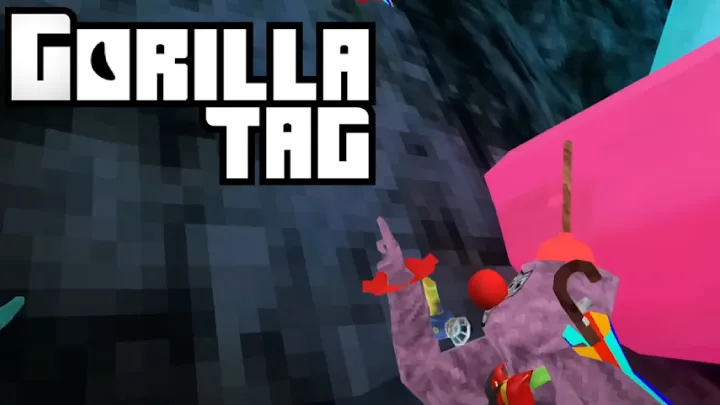
There are no tutorials in Gorilla Tag. Players learn by experimenting and observing others.
This creates organic skill growth.
Learning Process
- Trial and error
- Watching experienced players
Self-Taught Mastery
Skills feel earned.
4. Basic Movement Techniques Every Player Learns
Early players learn to push, climb, and swing efficiently.
These basics form the foundation of advanced play.
Essential Skills
- Wall pushing
- Tree climbing
Early Focus
Control before speed.
5. Advanced Movement and Momentum Control
Experienced players use momentum to move quickly across maps.
Speed comes from efficiency, not strength.
Advanced Techniques
- Wall chaining
- Momentum redirection
Skill Ceiling
Always room to improve.
6. Map Design and Vertical Gameplay
Maps in Gorilla Tag emphasize vertical movement rather than flat ground.
Players must think in three dimensions.
Map Features
- Walls
- Trees
- Platforms
Spatial Awareness
Height equals advantage.
7. Tag Mechanics and Player Pressure
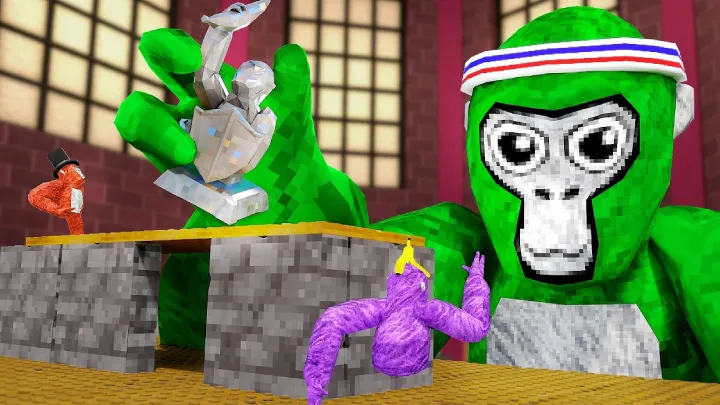
The infection-style tag mode creates constant tension.
One mistake can turn a chase into a loss.
Tag Rules
- One infected player
- Infection spreads by touch
Adrenaline Factor
Chases stay intense.
8. Social Interaction and Voice Communication
Proximity voice chat allows spontaneous conversations.
Social moments define the experience.
Social Elements
- Voice chat
- Gestures
Emergent Behavior
No match feels the same.
9. Cosmetic Progression Without Pay-to-Win
Progression in Gorilla Tag is cosmetic-only.
Skill determines success.
Cosmetic Items
- Hats
- Seasonal items
Fair Competition
No gameplay advantages.
10. Gorilla Tag’s Influence on VR Game Design
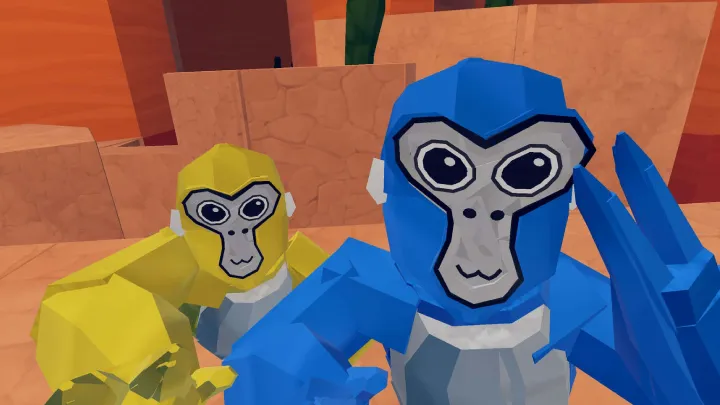
Gorilla Tag has inspired other movement-based VR games.
It proves simplicity can outperform complexity.
Industry Impact
- Physical-first design
- Minimal UI
Design Lesson
Movement is gameplay.
Conclusion
Gorilla Tag succeeds by stripping VR gameplay down to its most physical elements. With no artificial movement, no complex systems, and no pay-to-win mechanics, it delivers a raw and social experience driven entirely by player skill and interaction. As VR continues to evolve, Gorilla Tag stands as a powerful example of how innovation can come from simplicity.