.webp)





Geometry Dash is a rhythm-based platformer that combines fast reflexes, music synchronization, and extreme precision. With its simple one-touch control and increasing difficulty, the game has become a long-lasting favorite among players who enjoy mastering challenges. This article explores how Geometry Dash works, why it stays popular, and how players improve over time.
1. The Simple Concept Behind Geometry Dash
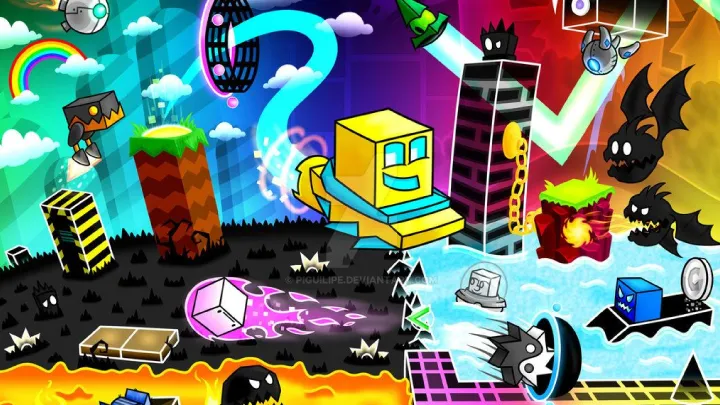
At its core, Geometry Dash is about jumping at the right moment. Players control a geometric icon that moves automatically through levels filled with obstacles.
The simplicity of the controls contrasts sharply with the difficulty of execution.
Core Mechanic
One input, perfect timing.
Immediate Engagement
Easy to learn, hard to master.
2. Music as a Gameplay Foundation
Music is not just background sound in Geometry Dash—it defines gameplay. Obstacles often sync directly with the beat.
Players learn to “feel” the level through rhythm.
Role of Music
- Sets timing
- Builds intensity
Audio Awareness
Sound guides movement.
3. Understanding Game Modes and Forms
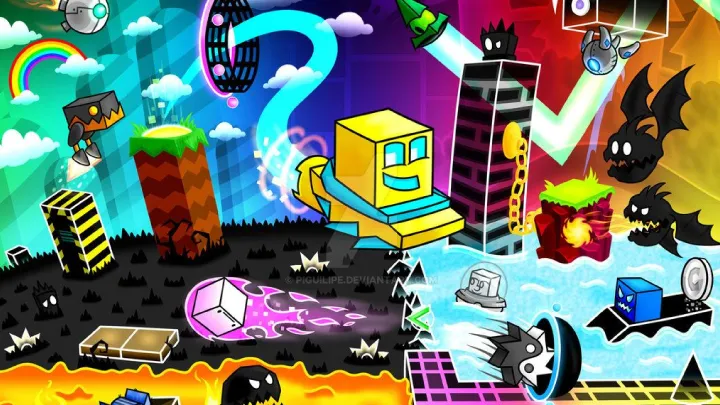
As players progress, their icon changes form, each with unique physics.
Learning these forms is essential to mastery.
Common Forms
- Cube
- Ship
- Ball
- Wave
Adaptation Skill
Each form requires a new mindset.
4. Early Levels and Skill Development
Early levels introduce mechanics gradually. Players learn timing, spacing, and patience.
Failure is frequent but expected.
Beginner Lessons
- Timing jumps
- Recognizing patterns
Learning Through Repetition
Mistakes build muscle memory.
5. Increasing Difficulty and Player Growth
Difficulty ramps up sharply. Later levels demand near-perfect execution.
This creates a strong sense of accomplishment.
Difficulty Curve
- Slow start
- Steep mastery curve
Mental Strength
Focus becomes as important as reflex.
6. How to Practice Effectively in Geometry Dash
Knowing how to practice saves time and frustration.
Practice mode allows players to isolate difficult sections.
Practice Tips
- Use checkpoints
- Focus on one section at a time
Improvement Strategy
Consistency beats speed.
7. User-Created Levels and Infinite Content
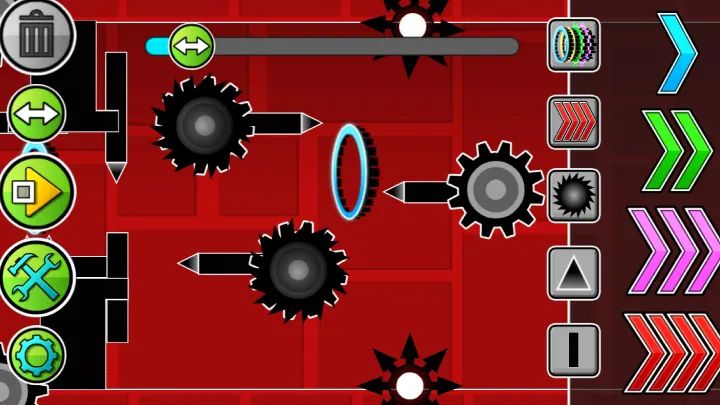
The level editor allows players to create and share levels.
This keeps Geometry Dash alive long-term.
Community Content
- Custom levels
- Challenge maps
Creativity Factor
Players become designers.
8. The Role of Memory and Pattern Recognition
Success relies heavily on memorization. Players learn obstacle sequences through repetition.
Memory turns chaos into predictability.
Cognitive Skills
- Pattern recognition
- Anticipation
Reaction Upgrade
Knowledge reduces reaction time.
9. Why Geometry Dash Appeals to Competitive Players
Completing difficult levels provides status and personal pride.
Players challenge themselves and others.
Competitive Motivation
- Level completion
- Skill comparison
Self-Competition
Beating your own limits.
10. Geometry Dash as a Test of Patience
More than reflexes, Geometry Dash tests patience and persistence.
Many attempts lead to one perfect run.
Core Lesson
Failure is part of success.
Mental Reward
Victory feels earned.
Conclusion
Geometry Dash remains popular because it transforms simple mechanics into deep mastery. Through rhythm, repetition, and precision, players develop skill, patience, and focus. The combination of music-driven gameplay and community creativity ensures that Geometry Dash continues to challenge and inspire players long after their first jump.