.webp)




Castle Crashers is often remembered for its cartoon violence, chaotic multiplayer, and absurd humor. At surface level, it presents itself as a lighthearted beat ’em up that prioritizes fun over depth. However, beneath the exaggerated animations and comedic tone lies a deceptively influential progression system. Unlike traditional arcade beat ’em ups that rely solely on player reflexes and memorization, Castle Crashers introduces a stat-based leveling structure that permanently alters how each character functions in combat. This article explores how that system, though visually understated, fundamentally shapes co-op balance, player roles, difficulty perception, and long-term responsibility in multiplayer sessions.
1. The Illusion of Equal Knights at the Start
At the beginning of Castle Crashers, all knights feel functionally identical.
Players start with similar health, strength, magic, and defense values. Early enemies are forgiving, allowing chaotic button-mashing to succeed.
This creates an illusion that character choice is cosmetic, delaying awareness of long-term mechanical consequences.
2. Leveling as a Quiet Commitment Mechanism
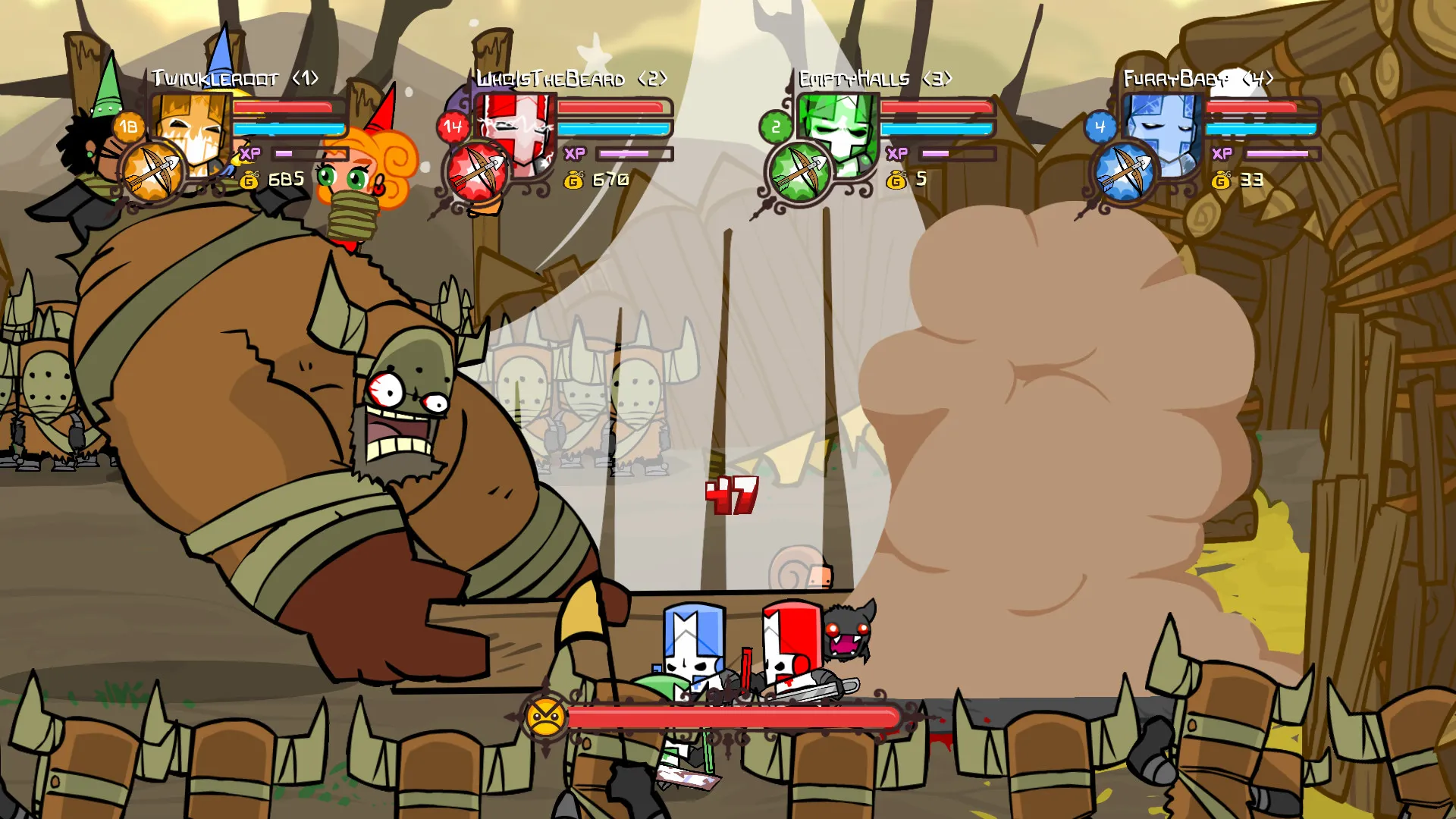
Each level-up forces players to invest stat points into permanent attributes.
Unlike skill trees that clearly signal specialization, Castle Crashers disguises commitment behind simple bars and icons.
Simplicity hiding consequence
Because the interface appears casual, players often allocate points impulsively, unaware of future trade-offs.
3. Stat Distribution Directly Alters Combat Identity
Strength-focused characters become executioners, ending encounters quickly but relying on others for survivability.
Magic-focused builds dominate crowd control and boss phases but struggle when mana is depleted.
Defense-heavy characters absorb pressure, unintentionally becoming frontline tanks in co-op scenarios.
4. Co-Op Difficulty Scales with Player Choices
Castle Crashers scales enemy health based on the number of players.
However, it does not scale intelligently based on build balance.
Unspoken dependency
Poor stat distribution by one player increases difficulty for everyone, turning leveling mistakes into shared consequences.
5. Magic as a Balance Disruptor
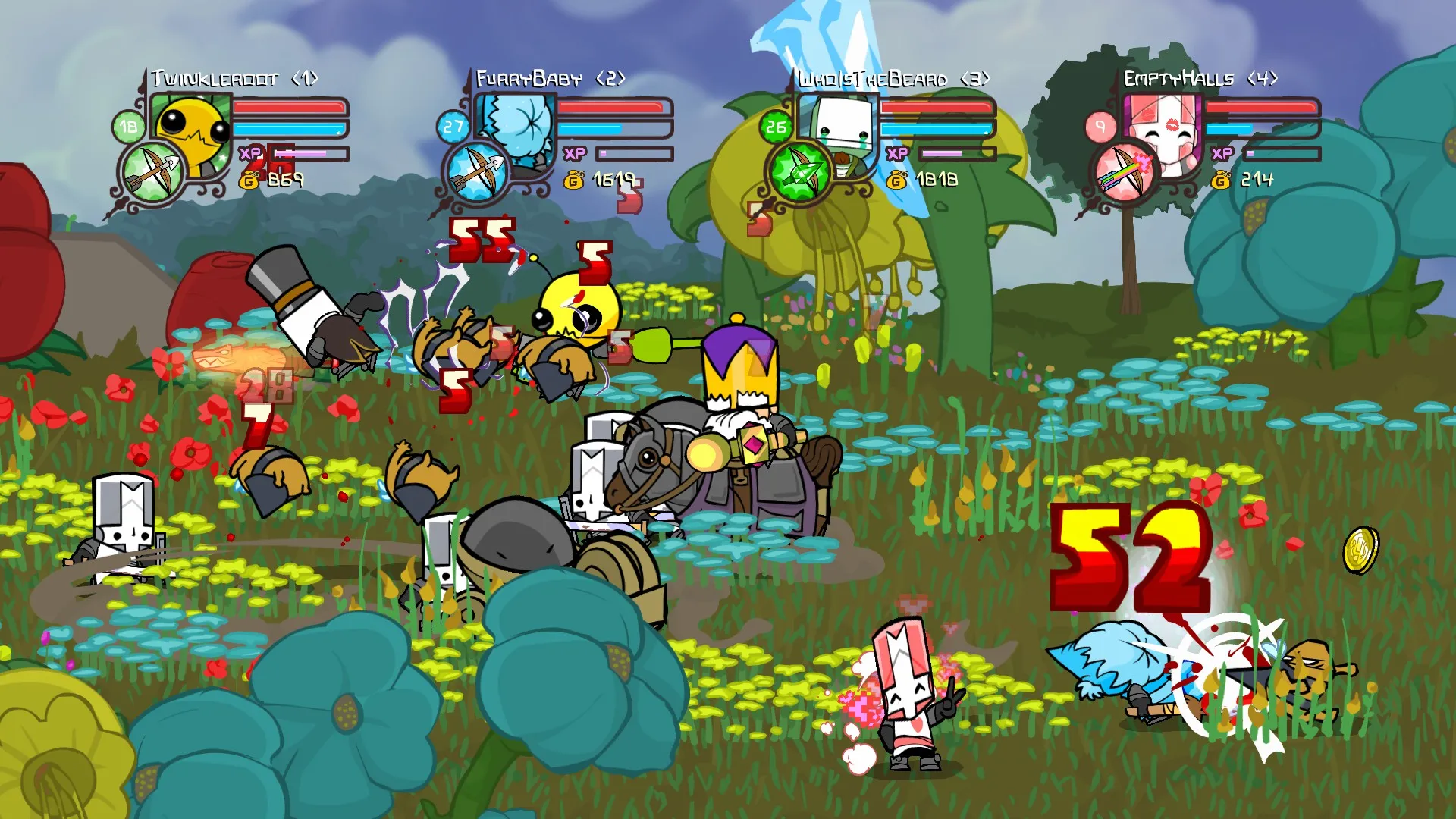
Magic builds can trivialize large enemy groups and boss encounters.
High magic investment allows near-permanent crowd control, bypassing intended enemy patterns.
This creates imbalance between players, where one member dominates encounters while others become spectators.
6. Strength Builds and Execution Pressure
Strength-focused characters rely on precision and positioning rather than control.
Missing attacks or misjudging enemy armor leads to rapid punishment.
Risk amplification
High strength builds increase personal pressure, rewarding skill but punishing inconsistency more harshly than other paths.
7. Defense and the Accidental Tank Role
Defense investment extends survivability but reduces offensive contribution.
In co-op, defensive players unintentionally draw aggro simply by remaining alive longer.
Passive responsibility
These players become anchors during chaotic moments, reviving teammates and stabilizing fights without explicit mechanics enforcing the role.
8. The Late-Game Revelation of Build Mistakes
By the time players reach late-game stages, respec options are nonexistent.
Poorly balanced builds struggle against armored enemies and tight encounter design.
This transforms Castle Crashers from a casual brawler into a test of earlier decision-making discipline.
9. Social Friction and Accountability in Multiplayer
Because progression is individual but consequences are shared, social dynamics emerge.
Players begin commenting on each other’s stat choices, introducing informal leadership and guidance.
Emergent coordination
The stat system encourages communication and planning, even though the game never explicitly demands it.
10. Why the System Endures Despite Its Simplicity
Castle Crashers’ stat system survives because it reinforces replayability.
Players often restart characters to correct earlier mistakes or explore different combat identities.
Learning through consequence
The absence of respecs turns failure into a teaching tool rather than a frustration.
Conclusion
Castle Crashers disguises one of its most impactful systems behind a playful exterior. Its stat-based leveling system quietly governs co-op balance, role emergence, and shared responsibility among players. By tying permanent progression choices to moment-to-moment combat effectiveness, the game transforms casual fun into an exercise in accountability. This design ensures that every knight’s growth matters—not just to themselves, but to the entire group—cementing Castle Crashers as a deceptively thoughtful co-op experience.